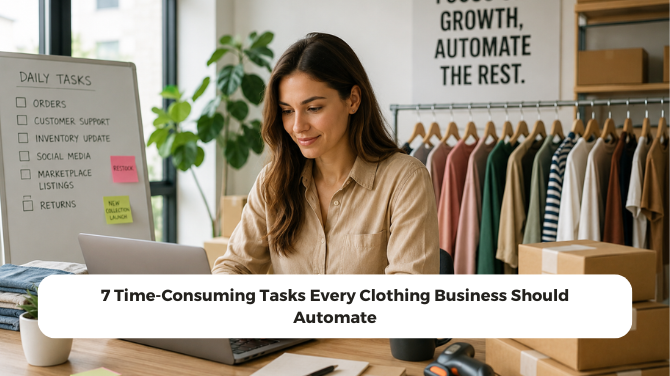
If you are starting a clothing business or you already have one, you know that it takes a lot of work every day to stay on top of the daily tasks. Things like talking to suppliers, planning marketing campaigns, and sketching your collections are one of those tasks that comes with other daily tasks like replying to hundreds of emails from customers and vendors, updating stock details and inventory, managing online marketplaces and listings, and managing returns. Before you know it, you are putting in more hours without getting anything meaningful done that would take your business to the next level. In this article, we are going to look at seven of these time consuming every day tasks that you can easily automate without using any code and available tools out there. So let’s get right into it.
Check out our woven fabric digital swatch here
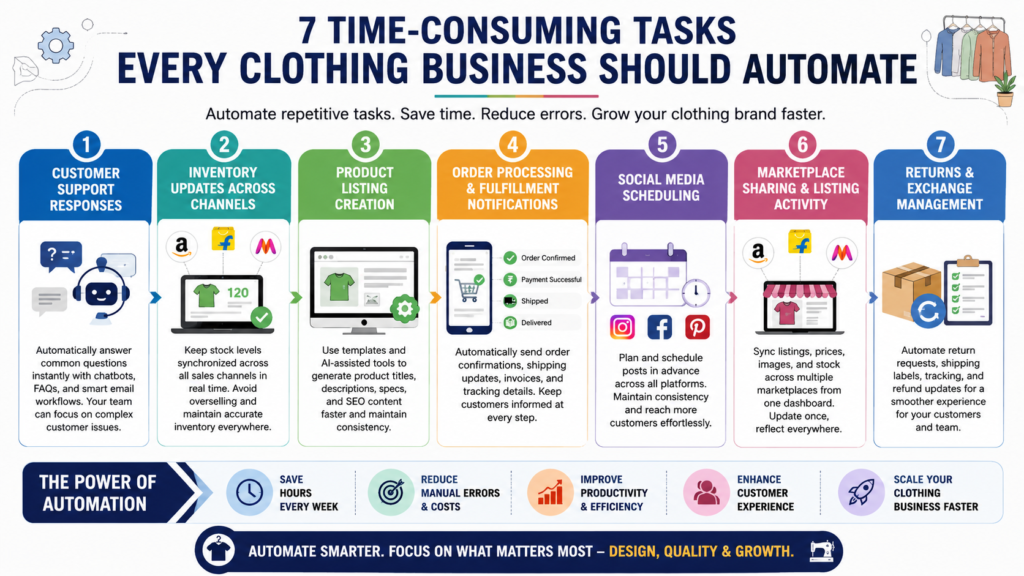
1. Customer Support Responses
If your fashion business is not getting hundreds, or even thousands, of customer support requests, then you are not doing it right, they say. Anyway, you will get the below
Questions like:
- Where is my order?
- Do you ship internationally?
- Which size should I choose?
- Can I exchange my order?
- What is your return policy?
These are simple questions in general, but when people are asking them over and over, and you need to give all of them the same attention to make them feel important and be a responsive business, then it can easily add p.
So what is the best way to automate them? Here are some ways:
- By using automated chatbots. With AI chats like ChatGPT and Claude becoming more popular, it is quite easy to plugin an AI chatbot to your website or email that can reply to your customer queries. All you need to do is feed the AI with the right answers and resources. It will then talk to the user just like you.
- FAQ sections. By having a frequently asked section, people can search and find the answers to their questions from the existing questions already answered.
- Email workflows. This is a system that uses a simple workflow to divert the emails to relevant departments and categories.
2. Inventory Updates Across Sales Channels
You already know the importance of having a presence in various sales channels, be it your website, Amazon, Flipkart, Myntra, and other retail partners and showrooms.
With multi-channel distribution, it is crucial that you have a system to keep your inventory updated all the time. But doing this on a daily basis is time-consuming and resource-heavy if you have hundreds of SKUs. Updating it manually also comes with its own unnecessary risks.
The risk is showing an out-of-stock item as available and then not being able to deliver it. If this happens once with a customer, then they are not going to come back to you again.
This is where inventory automation comes into play. It will sync the inventory across all platforms without someone manually checking it all the time. This too in real time. So none of the platforms will have outdated stock availability data.
3. Product Listing Creation
Selling online as a fashion brand is difficult due to its listing creation process. It requires a tremendous amount resources to launch products into various platforms as each of them require various checklists and its repetitive in nature.
Every product needs:
- Product title
- Description
- Fabric composition
- Size chart
- Care instructions
- Product images
- SEO keywords
- Pricing
- Product specifications
Now imagine launching fifty new styles every season following each of these checklist.
This is where automation can help. By using product launch templates, information management systems, and AI-assisted drafting can speed up these processes. This reduces just one important task for the team. This is reviewing the content before publishing it.
For example, things like knowing the correct GSM of the fabric, its weave construction, finish, and fiber composition help create more accurate product pages. If you want to learn more about specifications, then check out our recent article on Fabric GSM, Types of Woven Fabric Explained, and Cotton Blend Fabric.
4. Order Processing and Fulfillment Notifications
When a person orders something from you, they will need constant updates on what is happening with that order.
They want confirmation when:
- Payment is received
- Order is confirmed
- Package is dispatched
- Shipment is out for delivery
- Order has been delivered
If you don’t have automations for these, then it is not practical to have a professional business that people can trust. This is where automation helps.
An order management software system can automatically manage all the above things listed, like sending notifications throughout the fulfilment process without needing any oversight. You can do it using email, WhatsApp, or text. With today’s latest software, it can also do your invoices, shipping labels, warehouse picking lists, and courier tracking numbers without any manual work from you. Having this system not only saves you hundreds of man-hours every day but also improves your efficiency.
5. Social Media Scheduling
Fashion brands need to have a strong social media foundation. If you are launching a new line of clothing or telling your brand positioning strategy, it is through online platforms that you can do it. These days, having a large following can make or break your brand. Not everyone can do this. Achieving greatness on social media is just another additional task for your team that can quickly spiral into a big task.
Brands find it difficult to schedule posts every day, and their social media presence becomes inconsistent. This is where automation helps, things like scheduling tools will allow you to post everything for the month in advance. Just take a day and schedule everything in advance. See your social media work behind the scenes. This will allow you to prepare product launches, promotional campaigns, behind-the-scenes videos, and seasonal collections in one go. Many platforms like META also suggest the best posting times based on when your audience is most active so that you can schedule for those timings.
6. Marketplace Sharing and Listing Activity
If your fashion needs more sales, then it needs to be on various online platforms, including your own website. But managing them efficiently will take a lot more time and resources. For example, if you are launching a new product line, you or someone in your team needs to upload images, write descriptions, update pricing, manage stock details, and edit other product specifications across every marketplace you are selling on. Now imagine having hundreds of launches for it. This is where having a synchronized system across all connected platforms. This will help you save hundreds of hours and manual labour.
7. Returns and Exchange Management
Returns and exchanges are one of the most painful parts of a fashion business. Customers may order several pieces and request an exchange for a few of them. They may prefer a different color, size, or a garment than what they expected. This is an expected thing to happen. If you want to handle every manual request, then it is impossible to keep track of it. Having your returns and exchanges automated will handle phone calls, emails, invoices, requests and everything without manual oversight. On top of this, these automated systems can also help you find valuable insights in their dashboards.
Automation Starts With Better Product Information
At Dinesh Exports, we have been working with fashion brands around the world by supplying premium woven fabrics backed by complete technical specifications, consistent quality, and reliable sampling support for more than three decades. If you are planning on sourcing cotton, linen blends, Lyocell, or sustainable woven fabrics, we can make it much easier for your business. Contact us if you like to source woven fabrics from us.
If you want to learn more about woven fabric options for your next collection then feel free to check out these helpful guides:
- Best Fabrics for Fashion Design
- Fabric GSM Explained
- Cotton Blend Fabric Guide
- Linen Blend Fabric Guide
- Types of Woven Fabric Explained
- Lyocell Fabric Manufacturers in India
Final Thoughts
Running a fashion business is not an easy task if you are trying to scale it while managing things efficiently. Time will be your most valuable resource in these cases. This is the reason why you need to automate your processes as much as you can. This like answering repetitive customer questions, updating inventory, creating product listings, sending order notifications, scheduling social media posts, managing marketplace listings, and processing returns, which can all be automated with what we have available out there in terms of technology. The time you save can then be invested in designing better products, improving customer relationships, and growing your brand for the future.
Frequently Asked Questions
What is the meaning of fashion business automation?
By using various technology apps and software, you can automate daily tasks like inventory management, customer support, order processing, product listings, and returns with minimal manual effort.
Which task should clothing brands automate first?
Based on the heavy workload, you can start to automate that. Usually, customer queries and answers can be automated first without much effort.
Can small clothing brands benefit from automation?
Small businesses with a low budget can always benefit from automation as it is ideal for teams with no to fewer resources.
Does automation improve customer satisfaction?
With automated customer replies, every customer will get the same importance as everyone and their queries will get answered easily, which will improve customer satisfaction