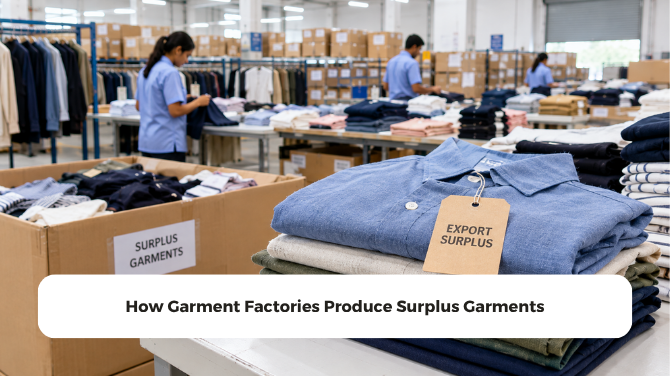
Surplus garments are commonly found in apparel markets, often sold at lower prices than regular retail products. But how do these garments end up outside the original buyer’s order?
For garment manufacturers, surplus stock can result from overproduction, quality issues, fabric or printing problems, and cancelled shipments. Understanding these reasons helps explain why surplus garments are generated and why buyers should be careful when purchasing products marketed as export surplus.
What Are Surplus Garments?
In a true sense, garment factories do not produce surplus garment intentionally. They make garments for their buyers (international). When they can’t sell some garments from whatever quantity they made, those stock lots become surplus garments for the garment factory. The question is incorrect in that sense. You may be asking for how surplus garments are generated at the garment factories.
Surplus garments are known as export surplus. Retailers sell surplus garments as export surplus products. As the product design, fabric and trims quality are very good, available at a lower price, consumer love for buying an export surplus garment.
Garment factories sell that surplus garment to the surplus market (wholesalers).
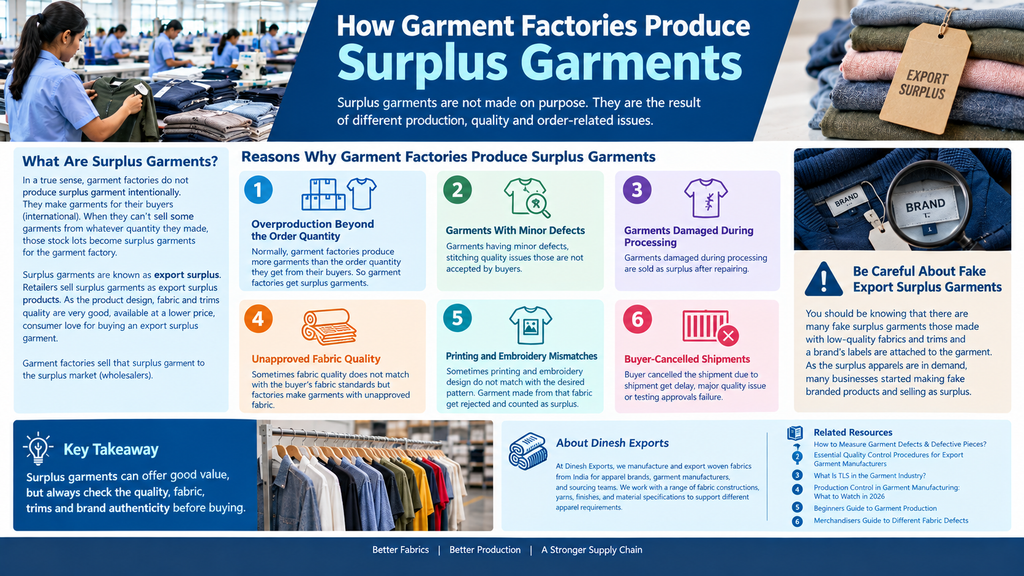
To answer this question, here I have listed some of the reasons how a huge volume of the surplus garments generated in garment factories.
Reasons Why Garment Factories Produce Surplus Garments
1. Overproduction Beyond the Order Quantity
- Normally, garment factories produce more garments than the order quantity they get from their buyers. So garment factories get surplus garments.
2. Garments With Minor Defects
- Garments having minor defects, stitching quality issues those are not accepted by buyers
3. Garments Damaged During Processing
- Garments damaged during processing are sold as surplus after repairing
4. Unapproved Fabric Quality
- Sometimes fabric quality does not match with the buyer’s fabric standards but factories make garments with unapproved fabric.
5. Printing and Embroidery Mismatches
- Sometimes printing and embroidery design do not match with the desired pattern. Garment made from that fabric get rejected and counted as surplus.
6. Buyer-Cancelled Shipments
- Buyer cancelled the shipment due to shipment get delay, major quality issue or testing approvals failure.
Be Careful About Fake Export Surplus Garments
You should be knowing that there are many fake surplus garments those made with low-quality fabrics and trims and a brand’s labels are attached to the garment. As the surplus apparels are in demand, many businesses started making fake branded products and selling as surplus.
Related Resources
Explore these related Dinesh Exports articles for more information on garment quality, production control, fabric defects, and manufacturing processes.
- How to Measure Garment Defects & Defective Pieces?
https://dineshexports.com/how-to-measure-garment-defects-defective-pieces/ - Essential Quality Control Procedures for Export Garment Manufacturers
https://dineshexports.com/quality-control-procedures-in-export-garment-manufacturing/ - What Is TLS in the Garment Industry?
https://dineshexports.com/tls-in-the-garment-industry/ - Production Control in Garment Manufacturing: What to Watch in 2026
https://dineshexports.com/production-control-in-garment/ - Beginners Guide to Garment Production
https://dineshexports.com/beginners-guide-to-garment-production/ - Merchandisers Guide to Different Fabric Defects
https://dineshexports.com/merchandisers-guide-to-different-fabric-defects/
About Dinesh Exports
At Dinesh Exports, we manufacture and export woven fabrics from India for apparel brands, garment manufacturers, and sourcing teams. We work with a range of fabric constructions, yarns, finishes, and material specifications to support different apparel requirements.
Fabric quality and consistency are important throughout garment production. Selecting suitable fabrics and checking their specifications before bulk production can help manufacturers reduce avoidable quality problems and maintain consistency in finished garments. If you want to learn more or enquire, please contact us.
Conclusion
Surplus garments can arise for several reasons, including overproduction, rejected pieces, processing damage, fabric and print mismatches, and cancelled shipments. While genuine export surplus products may offer value to consumers, not every garment sold under this label necessarily comes from an actual export order.
Understanding the source and quality of surplus garments matters. Buyers should be cautious about claims of brand authenticity and check fabric quality, stitching, trims, and other product details before purchasing.