Achieving consistent fabric colour is one of the most important steps in textile manufacturing. A shade that looks correct on a reference fabric may appear different during bulk dyeing due to variations in fabric composition, dyeing conditions, equipment and raw materials.
The fabric color approval procedure helps buyers, textile manufacturers and suppliers establish an agreed colour standard before starting bulk production.
This process involves defining colour standards, preparing laboratory dye samples (lab dips), evaluating shade differences and approving production samples. Following a structured fabric colour approval process helps minimise colour variations, reduce production risks and maintain consistency across dye lots.
What Is the Fabric Color Approval Procedure?
The fabric color approval procedure is a systematic process used by buyers and textile manufacturers to achieve an agreed fabric shade before bulk dyeing begins.
The procedure generally involves four important stages:
- Selecting and sourcing the reference fabric.
- Defining colour standards and acceptable shade tolerances.
- Preparing and reviewing laboratory lab dips.
- Matching and approving production fabric shades.
Each stage ensures that the approved colour standard is communicated clearly between the customer and the supplier.
1. Define Fabric Colour Standards
The first step in the fabric colour approval process is establishing a clear colour standard for production.
The customer should provide a physical reference swatch representing the required fabric colour. Both the customer and supplier should retain approved reference samples for future comparison.
Consider the following factors when defining colour standards:
- Reference fabric: Provide a sufficiently large fabric swatch to help the supplier evaluate the required shade.
- Fabric composition: Cotton, polyester and blended fabrics can absorb dyes differently.
- Fabric weight: Different fabric weights and constructions may affect the final colour appearance.
- Colour tolerance: Agree on acceptable shade variations before production begins.
- Colour references: Pantone colour references can help communicate colour requirements, but printed paper swatches may look different from dyed fabric.
A physical fabric reference is particularly important because the final appearance depends on the fabric composition, texture, construction and dyeing method.
2. Understand the Fabric Lab Dip Process
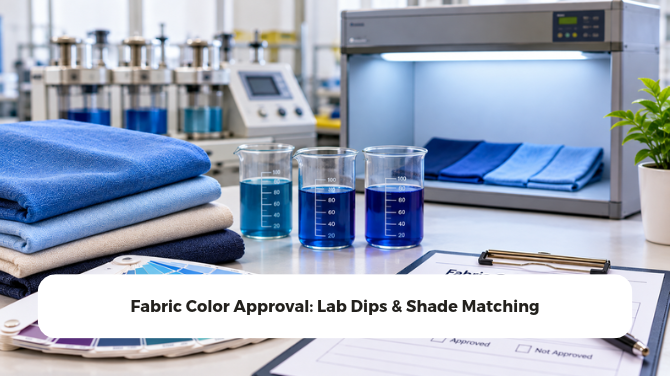
A lab dip is a small dyed fabric sample prepared in a laboratory to evaluate how a requested colour will appear on a particular fabric.
Before bulk dyeing, textile manufacturers prepare multiple lab dip variations to achieve the closest possible match to the customer’s approved colour standard.
How Does the Lab Dip Process Work?
The typical lab dip approval process includes:
- The customer provides a colour reference or specified colour standard.
- The dyeing laboratory analyses the fabric and required shade.
- Different dye formulations are prepared.
- Small fabric samples are dyed under controlled laboratory conditions.
- The samples are evaluated against the original colour standard.
- The selected lab dip is submitted to the customer for approval.
- Bulk dyeing proceeds after approval.
What Is a Lab Dip Machine?
A lab dip machine is laboratory equipment used to prepare small dyeing samples under controlled conditions.
It can be used for dyeing fabric, yarn and loose stock samples. Depending on the equipment, multiple beakers allow different dye formulations to be tested simultaneously.
Laboratory dyeing conditions are not identical to bulk production conditions. Differences in machine capacity, liquor circulation, temperature control and processing conditions can influence the final shade.
Therefore, an approved lab dip serves as the colour reference for production rather than a guarantee of an identical bulk shade.
3. Fabric Colour Matching and Shade Evaluation
Colour matching is a critical stage of the fabric colour approval procedure.
The supplier must ensure that the production fabric matches the approved colour standard as closely as commercially achievable.
However, slight shade differences may occur between laboratory samples and bulk dye lots.
What Is a Colour Matching Cabinet?
A colour matching cabinet is a specialised inspection unit used to evaluate fabric colour under controlled lighting conditions.
It helps buyers, quality control teams and textile manufacturers identify shade differences that may not be visible under ordinary lighting.
Common light sources used in colour assessment include:
- D65: Artificial daylight simulation.
- TL84: Commercial store lighting simulation.
- CWF: Cool white fluorescent lighting.
- UV: Ultraviolet light for assessing optical brighteners and fluorescent effects.
- A: Incandescent or tungsten lighting simulation.
Evaluating fabric samples under different light sources helps identify metamerism, a condition in which two colours appear similar under one light source but different under another.
How Is Fabric Shade Matching Approved?
The supplier typically submits a production shade sample to the customer for evaluation.
The customer compares the production sample with the approved reference standard and lab dip.
The assessment should consider:
- Overall shade similarity.
- Colour depth and intensity.
- Lightness and darkness.
- Hue differences.
- Shade consistency across the fabric.
- Acceptable colour tolerance.
Once the production sample meets the agreed requirements, the customer can approve the shade for bulk production.
4. Factors That Affect Fabric Colour Variation
Achieving an exact colour match across different dye lots can be challenging because several manufacturing variables influence the final fabric shade.
Some common factors include:
1. Fabric manufacturing differences
Fabric produced by different mills may have variations in processing methods, equipment, construction and preparation.
2. Dye lot variations
Dyes and chemicals can have slight variations between batches, which may influence the final shade.
3. Atmospheric conditions
Changes in temperature and humidity can affect certain dyeing and processing conditions.
4. Fabric preparation
Differences in scouring, bleaching and other pretreatment processes can influence dye absorption.
5. Raw material variations
Natural fibres such as cotton may vary between crops and batches, affecting dye uptake and colour consistency.
6. Dyeing conditions
Variations in temperature, dye concentration, pH, processing time and liquor ratio can affect the final colour.
Manufacturers must monitor these variables throughout production to maintain consistency with the approved colour standard.
5. Best Practices for Fabric Colour Approval Before Bulk Production
Following a standardised approval procedure helps reduce production errors and minimise shade-related rejections.
Recommended practices include:
- Maintain a physical copy of the approved colour standard.
- Use the same fabric composition and construction for lab dip development.
- Clearly communicate colour tolerances between the buyer and supplier.
- Evaluate samples under standardised lighting conditions.
- Maintain records of approved lab dips and production shade samples.
- Conduct shade inspections at appropriate production stages.
- Obtain documented customer approval before proceeding with bulk dyeing.
These practices help improve communication between buyers, merchandisers, dyeing units and quality control teams.
Frequently Asked Questions
1. What is a fabric lab dip?
A fabric lab dip is a small dyed fabric sample prepared in a laboratory to check whether the required colour can be achieved before bulk dyeing.
2. Why is lab dip approval important?
Lab dip approval helps buyers and suppliers agree on a colour standard before production, reducing the risk of shade mismatches and bulk fabric rejection.
3. What is the difference between a lab dip and a bulk dyeing sample?
A lab dip is produced under laboratory conditions using a small sample. A bulk dyeing sample comes from actual production and reflects the conditions of the manufacturing process.
4. What is a colour matching cabinet used for?
A colour matching cabinet evaluates fabric shades under standardised lighting conditions to identify colour differences and metamerism.
5. Why does fabric colour vary between dye lots?
Fabric composition, raw material differences, dye formulations, pretreatment, temperature, humidity and dyeing conditions can all contribute to shade variations.
6. Can a lab dip guarantee an exact bulk fabric colour match?
No. A lab dip provides an agreed colour reference, but laboratory and bulk production conditions differ. Production shade approval and agreed colour tolerances are therefore important.
Conclusion
The fabric color approval procedure is an essential part of textile product development and quality control. From defining colour standards and preparing lab dips to evaluating production samples, every stage contributes to achieving consistent fabric shades.
By following a structured lab dip approval process, using standardised colour matching equipment and maintaining clear communication between buyers and suppliers, textile manufacturers can reduce shade variations and improve bulk production quality.
About Dinesh Exports
Dinesh Exports is an Indian woven fabric manufacturer with experience in textile manufacturing since 1994. The company designs and manufactures woven fabrics for men’s, women’s and children’s apparel through its own dyeing and weaving facilities in India.
We work with fashion brands, garment manufacturers, merchandisers and sourcing teams looking for quality woven fabrics for different apparel applications.
Our fabric range includes cotton, yarn-dyed, printed, dobby, seersucker and other woven fabrics.
If you are developing a new fashion collection or sourcing woven fabrics for your business, explore our digital swatches to discover different fabric designs and constructions.
Contact Dinesh Exports to discuss your fabric requirements: https://dineshexports.com/contact-us
Related Resources
- In-House Textile Lab: Essential Tests & Machines
- 10 Practical Ways to Reduce Garment Sampling Delays
- Yarn Dyed Fabric Manufacturer: What to Know Before You Choose
- Fabric GSM: Small Number Affecting Fabric Manufacturing
- Cotton Yarn: What It Really Means When You’re Sourcing Fabric
- Best Fabrics for Fashion Design: A Wholesale Buyer’s Guide