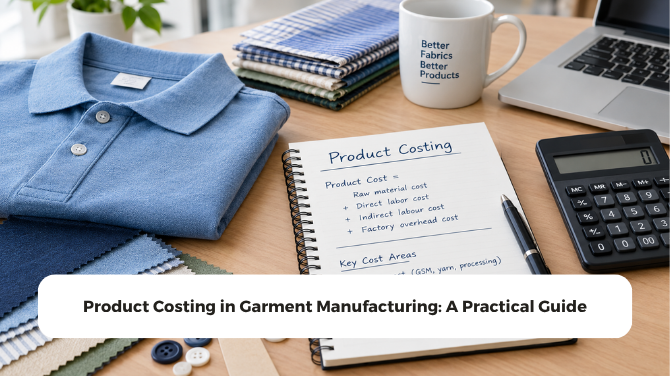
Product Costing in Garment Manufacturing: A Practical Guide

Product Costing in Garment Manufacturing: A Practical Guide

Product costing is an important part of apparel manufacturing because it helps businesses understand how much it costs to make a garment before deciding its selling price. For merchandisers, garment manufacturers, and sourcing teams, accurate costing means accounting for fabric, trims, labour, processing, and factory overheads. Even a small error in fabric consumption or process […]
Read more
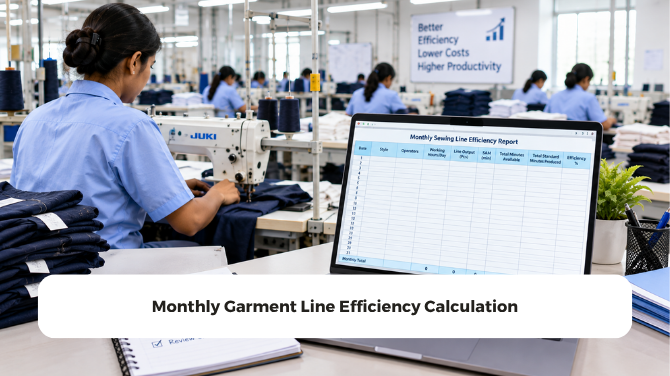
Monthly Garment Line Efficiency Calculation

Monthly Garment Line Efficiency Calculation

Monthly efficiency figures help garment factory management understand how well sewing lines and production floors are performing. They also help with labour cost control, factory capacity planning, and production targets. This guide explains how to prepare a monthly sewing line efficiency report and calculate the overall efficiency of a sewing floor. Monthly Efficiency Calculation for […]

Read more
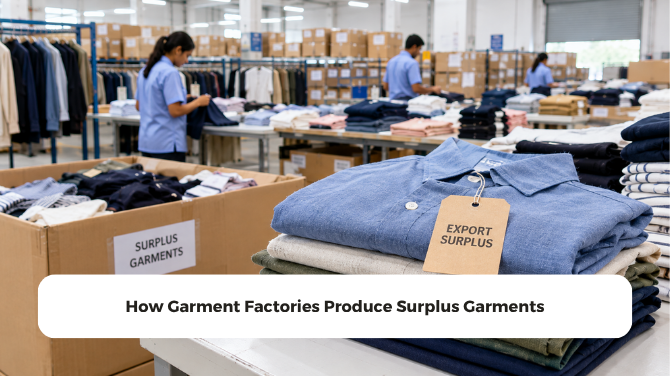
How Garment Factories Produce Surplus Garments

How Garment Factories Produce Surplus Garments

Surplus garments are commonly found in apparel markets, often sold at lower prices than regular retail products. But how do these garments end up outside the original buyer’s order? For garment manufacturers, surplus stock can result from overproduction, quality issues, fabric or printing problems, and cancelled shipments. Understanding these reasons helps explain why surplus garments […]

Read more
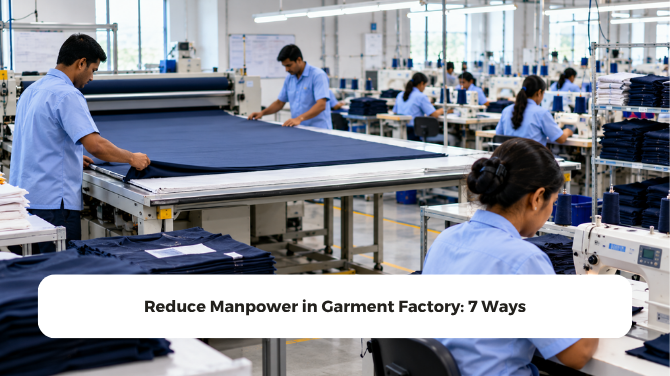
Reduce Manpower in Garment Factory: 7 Ways

Reduce Manpower in Garment Factory: 7 Ways

Manpower is one of the highest operating costs in garment manufacturing, but reducing headcount should not be the first solution. A better approach is to understand where workers are being underutilized, measure the actual work required, improve skills, and use machines or better methods where they make sense. This article looks at practical ways to […]

Read more
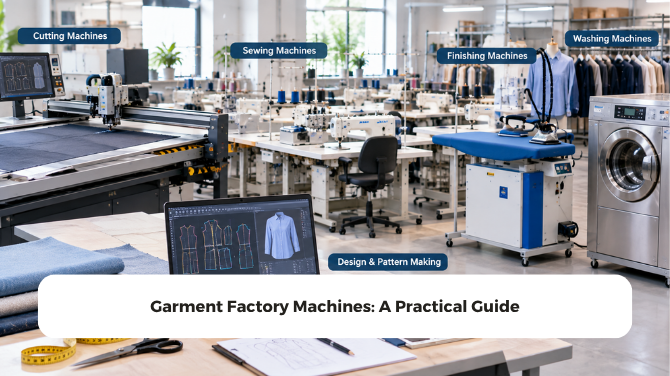
Garment Factory Machines: A Practical Guide

Garment Factory Machines: A Practical Guide

Starting a garment manufacturing business involves much more than buying sewing machines. The right garment factory machines depend on the products you plan to manufacture, their construction, production volume, and the processes your factory will handle. A small unit making shirts will have different machine requirements from a factory producing T-shirts, leggings, jeans, or other […]

Read more
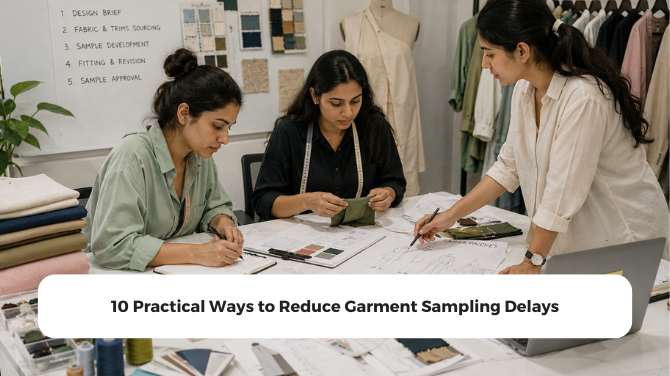
10 Practical Ways to Reduce Garment Sampling Delays

10 Practical Ways to Reduce Garment Sampling Delays

The garment sampling process is an important part of the apparel manufacturing cycle. Delays in sampling and sample approvals impact on-time shipment delivery. Secondly, when the sampling process gets delayed, the productivity of the sampling department gets reduced. To address this, garment manufacturers must take certain actions to reduce he sample development time.  The question […]

Read more
Cotton Fabric for Shirts: Why Brands Still Prefer It for Quality Apparel

Cotton Fabric for Shirts: Why Brands Still Prefer It for Quality Apparel

TL;DR Cotton fabric remains one of the most popular materials used for shirts because it offers breathability, comfort, and durability. Different cotton weaves such as poplin, oxford, and twill provide unique textures and performance characteristics for various shirt styles. For apparel brands sourcing fabrics globally, working with reliable exporters ensures consistent quality, accurate sampling, and […]

Read more
Merchandise Manager Roles in Apparel Buying House

Merchandise Manager Roles in Apparel Buying House

TL;DR An apparel buying house merchandise manager connects buyers and factories. They handle costing, sampling, vendor coordination, production tracking, quality control, and shipment management to ensure orders are delivered on time and within budget. Check out our digital swatch here Why this role is central in a buying house In a garment factory, merchandising is […]

Read more
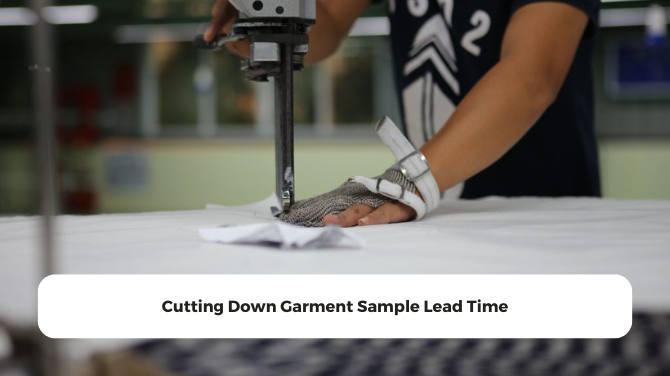
Cutting Down Garment Sample Lead Time

Cutting Down Garment Sample Lead Time

TL;DR Garment sampling delays usually happen because of unclear tech packs, late fabric approvals, and too many back and forth corrections. Fixing communication, planning fabrics early, and standardising processes can significantly cut sample lead time. Why sample development takes longer than it should In theory, garment sampling should be simple. In reality, it’s where most […]

Read more
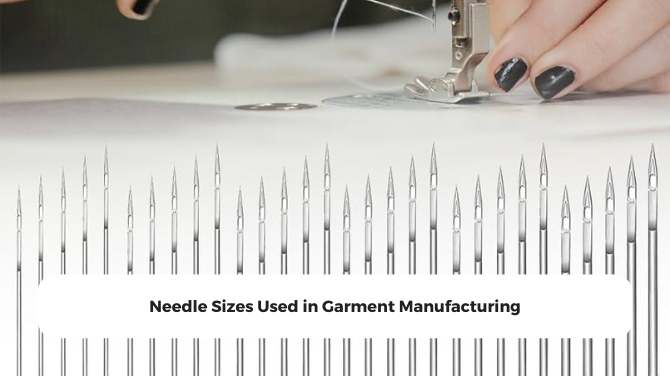
Needle Sizes Used in Garment Manufacturing

Needle Sizes Used in Garment Manufacturing

TLDR Choosing the right sewing needle size is not a small decision. The wrong needle can damage fabric, cause skipped stitches, or slow production. This guide explains common needle sizes used in garment manufacturing, how they are measured, and which fabrics they actually work best with. In garment factories, needles are often treated like consumables. […]

Read more