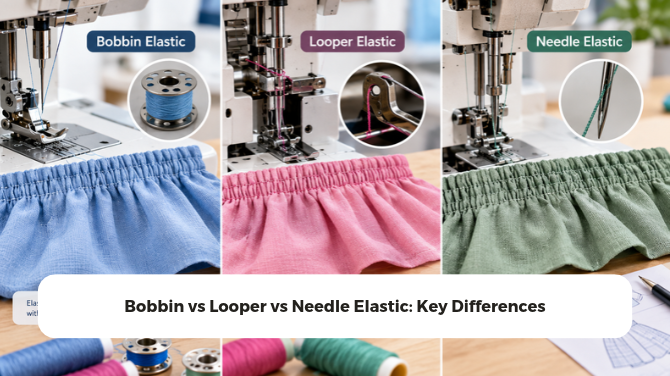
Elastic thread is used in garment manufacturing to create gathers, stretch, and decorative effects. However, the way elastic thread is fed into a sewing machine changes the stitch formation, equipment requirements, and final appearance of the garment.
Understanding the differences between bobbin elastic, looper elastic, and needle elastic helps garment manufacturers, production teams, and merchandisers identify the right sewing method for a particular garment construction.
Bobbin, Looper, and Needle Elastic
Check out our digital garment swatch here
When is elastic thread called bobbin elastic, looper elastic, and needle elastic?
The differences between these threads are explained here.
1. Bobbin Elastic
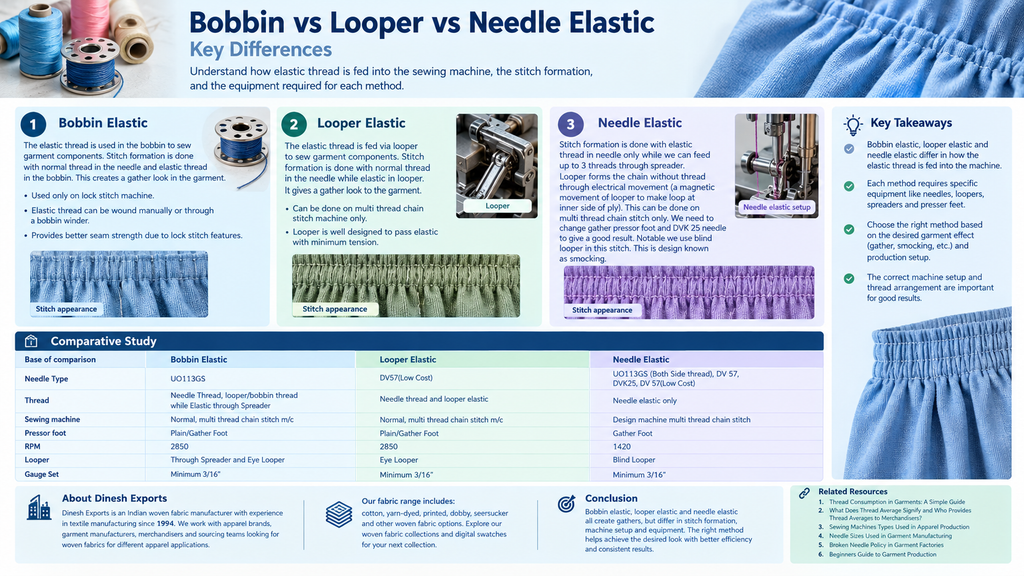
When the elastic thread is used in the bobbin to sew garment components, it is known as bobbin elastic. Stitch formation is being done with normal thread in needle and elastic thread in bobbin. This is used to provide gather look in the garment.
This stitch is being done on lock stitch machine only. Elastic thread can be winded (coiled) in bobbin manually or through bobbin winder. This stitch is helpful to provide better strength to seam due to lock stitch features.
2. Looper Elastic
When the elastic thread is fed via looper to sew garment components are known as looper elastic. Stitch formation is being done with normal thread in needle while elastic in looper. It gives gather look to the garment. This stitch can be done on multi thread chain stitch machine only. Looper is well designed to pass elastic with minimum tension.
3. Needle Elastic
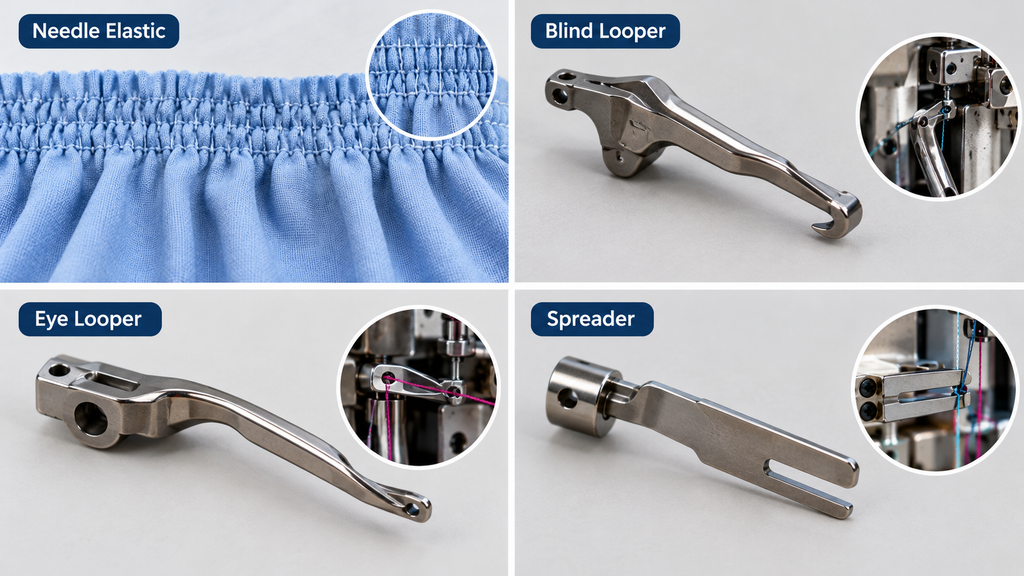
In case of needle elastic, stitch formation is being done with elastic thread in needle only while we can feed up to 3 threads through spreader. Looper forms the chain without thread through electrical movement (a magnetic movement of looper to make loop at inner side of ply). This can be done on multi thread chain stitch only. We need to change gather pressor foot and DVK 25 needle to give a good result. Notable we use blind looper in this stitch. This is design known as smocking.
Images of Needle Elastic and Sewing Machine Components
Comparative Study of Bobbin, Looper, and Needle Elastic
A comparative study of usage of elastic thread in 3 different form and equipment requirement are shown in the following table.
| Base of comparison | Bobbin Elastic | Looper Elastic | Needle Elastic |
| Needle Type | UO113GS | DV57(Low Cost) | UO113GS (Both Side thread), DV 57, DVK25, DV 57(Low Cost) |
| Thread | Needle Thread, looper/bobbin thread while Elastic through Spreader | Needle thread and looper elastic | Needle elastic only |
| Sewing machine | Normal, multi thread chain stitch m/c | Normal, multi thread chain stitch m/c | Design machine multi thread chain stitch |
| Pressor foot | Plain/Gather Foot | Plain/Gather Foot | Gather Foot |
| RPM | 2850 | 2850 | 1420 |
| Looper | Through Spreader and Eye Looper | Eye Looper | Blind Looper |
| Gauge Set | Minimum 3/16” | Minimum 3/16” | Minimum 3/16” |
About Dinesh Exports
Dinesh Exports is an Indian woven fabric manufacturer with experience in textile manufacturing since 1994. With its own dyeing and weaving mill in India, the company develops design-driven woven fabrics for men’s, women’s, and children’s clothing.
We work with apparel brands, garment manufacturers, merchandisers, and sourcing teams looking for woven fabrics for different apparel applications. Our fabric range includes cotton, yarn-dyed, printed, dobby, seersucker, and other woven fabric options.
For garment manufacturers developing new collections, selecting the right fabric is an important part of product development. You can explore our woven fabric collections and digital swatches to review suitable options for your next collection.
Conclusion
Bobbin elastic, looper elastic, and needle elastic differ mainly in how the elastic thread is fed into the sewing machine and how the stitch is formed. Each method has specific equipment requirements, including needle types, loopers, spreaders, and presser feet.
Understanding these differences helps garment production teams choose the appropriate method for creating gathers and smocking effects. The right machine setup and thread arrangement are important for achieving the intended garment appearance.
Related Resources
- Thread Consumption in Garments: A Simple Guide
- What Does Thread Average Signify and Who Provides Thread Averages to Merchandisers?
- Sewing Machines Types Used in Apparel Production
- Needle Sizes Used in Garment Manufacturing
- Broken Needle Policy in Garment Factories
- Beginners Guide to Garment Production