Hemp is becoming increasingly popular in the Indian textile industry in 2026. People are buying it because they like the feel, softness, breathability, and overall sustainability story behind the fiber. But pure hemp fabric is difficult to manufacture as the process comes with certain limitations and long-term effects. This is the reason why hemp blend fabrics are becoming popular and common among buyers and manufacturers. Both domestic and international clients are asking for this, increasing the demand. Woven fabric manufacturers started blending hemp with other fibers like cotton, linen, viscose, etc to improve its softness, durability, wrinkly recovery, etc. The Indian government is also taking positive actions when it comes to supporting sustainable textile manufacturing and exports.
Download the digital swatch here
What Is Hemp Blend Fabric?
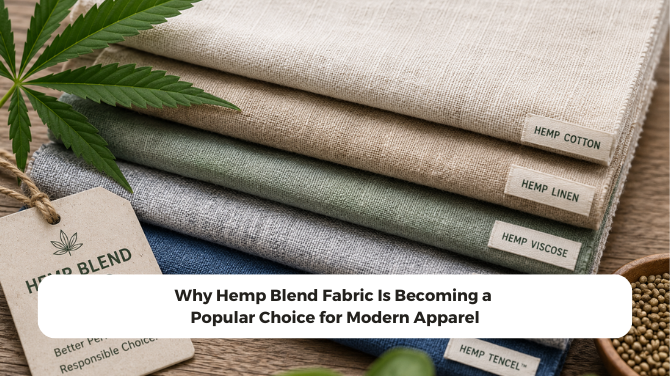
Hemp blend fabric is made by combining hemp fiber together with another fiber during yarn production or weaving. The decision on which fiber to blend with hemp is taken based on the final use case. It’s a simple thought process: as hemp fabrics are already high in softness and durability, it is blended with fabrics that can complement their qualities. Some fibers improve durability, while others will be able to improve drape, wrinkle recovery, stretchiness, or moisture control. This is the reason why two hemp blend fabrics behave completely differently even when they look similar.
Why Manufacturers Use Hemp Blend Fabrics
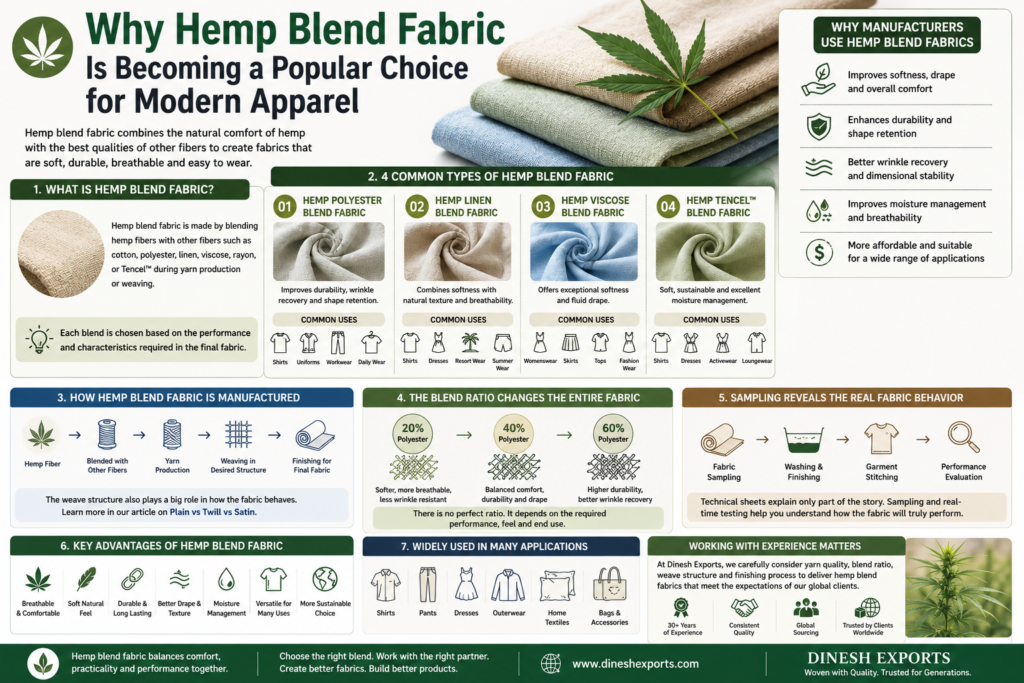
Pure hemp fabrics are really not that comfortable to wear; they also comes with manufacturing limitations and other factors depending on the final application. For example, hemp fabrics can easily wrinkle. If it is made using a simple construction that is lightweight, it can also lose stability easily. This is why hemp blend fabrics are highly useful.
If we blend hemp with polyester, it will improve wrinkle resistance and stability. If it is viscose that is being blended with hemp, then it will improve the softness and drape of the fabrics. Another good example is the hemp linen blend fabrics; it will still maintain the overall appearance of the hemp fabrics but give it more breathability and a natural look.
4 Common Types of Hemp Blend Fabric
1. Hemp Polyester Blend Fabric
Hemp polyester blend fabric is one of the most common hemp blend fabrics right now. The reason is that polyester blends easily with hemp to improve the durability, wrinkle recovery, and shape retention in the final product. It is being used for making uniforms, shirts, workwear, and daily wear.
2. Hemp Linen Blend Fabric
Hemp linen blend fabrics are used for combining the softness of linen with natural texture of hemp. Here, the linen gives the fabric its airy look, while hemp reduces stiffness and improves comfort. This blend is widely used in summer garments like shirts, dresses, and lightweight resort wear around the world.
3. Hemp Viscose Blend Fabric
Hemp viscose blend fabric is made for soft, fluid-looking fabrics. The final product looks almost like cotton fabric with smoother drape. It is used for making womenswear and lightweight fashion garments.
4. Hemp Tencel™ Blend Fabric
Tencel is already a sustainable fiber popular around the world as a premium but affordable fabric. It is then blended with hemp to create a softer and more sustainable fabric that is more moisture-controlled. Learn more about Tencel fabric manufacturing in India in this recent article.
How Hemp Blend Fabric Is Manufactured
Hemp is usually blended during the yarn production stage with other fibers. The blended yarns are prepared based on the requirement and prepared for weaving. This finished yarn is used for weaving it into fabrics based on the client’s requirement. The dyeing process can either take place before weaving or after, based on the type of dyeing the client requires. This is where the weave structure affects the final product. We discussed this topic in detail in our recent article on plain vs twill vs satin.
The Blend Ratio Changes The Entire Fabric
The ratio used for blending hemp with other fibers is really the choice of the client and the final product it is made from it. It is mostly selected based on the how much softness, drape, wrinkle behavior, durability, breathability, and texture is required in the final finished product. This is why two fabrics with the same type of blends can behave differently; it is because the ratio is different in them.
Government Support is Expanding Hemp Textiles
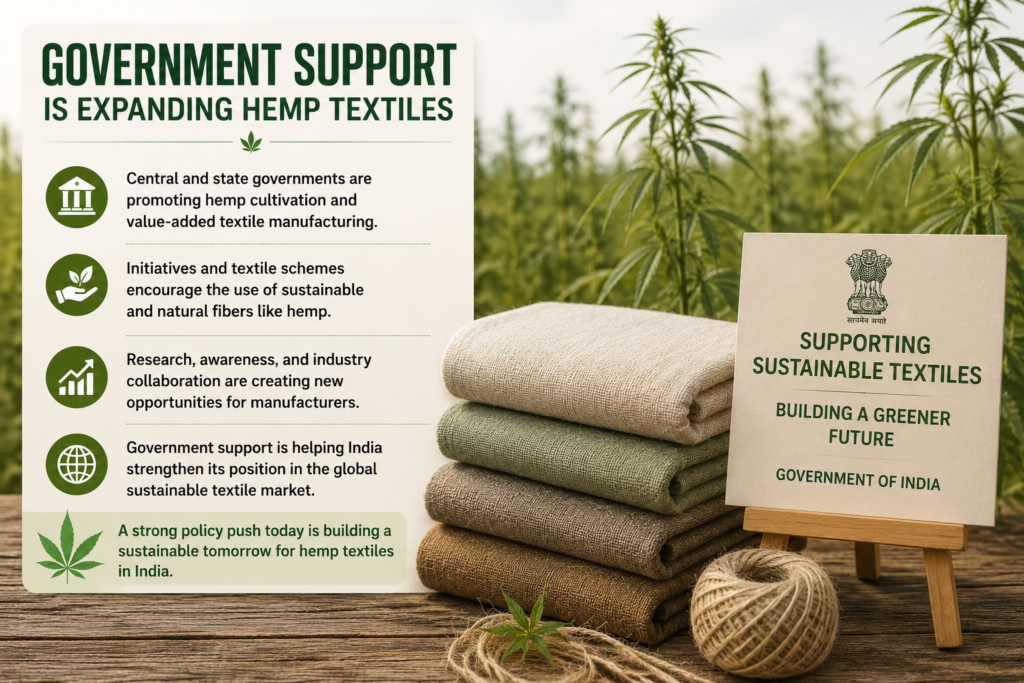
Indian government is spending resources to ensure that the hemp manufacturing ecosystem is growing. There are many government-backed textile schemes created by the current Indian government to encourage manufacturers to use alternative fibers like hemp and reduce dependence on synthetic fibers. There is a global demand growth for this type of hemp blended fabric, and these initiatives are created to give more opportunities for the hemp growers to capitalize and create new sectors. Especially in the northern part of Indian villages where hemp is grown freely.
Working With Hemp Fabric Manufacturers
Dinesh Exports has been manufacturing hemp blend fabrics for both domestic and international clients for more than three decades.
We look at yarn quality, blend ratio, weave structure, and finishing process carefully to achieve the required results our clients expect.
Working with experienced manufacturers becomes important because consistency matters a lot in bulk production. Contact us here for more information.
Final Thoughts
Hemp blended fabrics are increasingly becoming common in today’s world, and the demand is only getting stronger from both local and international clients. Due to its strengths and weaknesses that come with hemp, other fibers are blended with it to reduce its weaknesses and strengthen its qualities. Manufacturers control these qualities by changing how each fiber is blended in ratio. Weave structure and yarn quality are the other two important elements in deciding how the hemp blend fabric comes out as a final product. This is the reason why buyers usually look beyond just the fabric composition before finalizing sourcing decisions.
Frequently Asked Questions
What is hemp blend fabric?
Hemp blend fabric is made by combining hemp with other fibers like polyester, linen, viscose, or Tencel™ during yarn production or weaving.
Why are hemp blend fabrics popular?
Hemp blend fabrics are popular because they improve softness, durability, wrinkle recovery, and overall fabric performance.
Is hemp blend fabric better than pure hemp?
It depends on the application. Hemp blends are usually easier to maintain and may perform better depending on the required use case.
What are common fibers blended with hemp?
Hemp is commonly blended with polyester, linen, viscose, rayon, and Tencel™ fibers.
Does hemp blend fabric shrink?
Some hemp blend fabrics may shrink slightly, but usually less compared to pure hemp depending on the blend and finishing process.