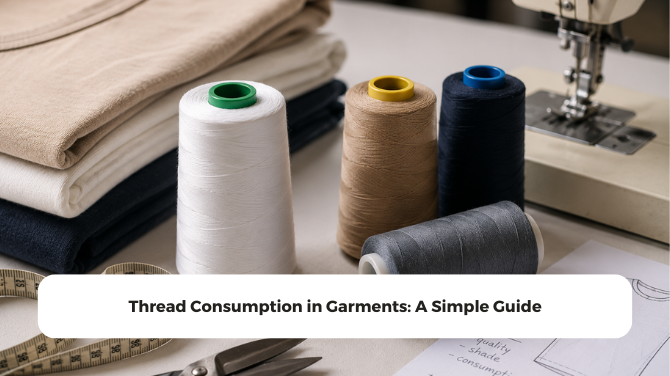
Most of us overlook sewing threads in our garment production process. Even though it is a tiny material, it is of high significance. In fact, if you get the calculations wrong, your entire production may come to a halt. For a single piece of garment, a high amount of thread is not required, but when you are manufacturing hundreds of pieces, then it becomes a pain point to get it right. This is why thread consumption in garments is a key factor in the whole production process. I am going to take you through what thread consumption means and why, as a garment manufacturer, you need to calculate it properly to help you with your efficiency.
What is Thread consumption in Garments?
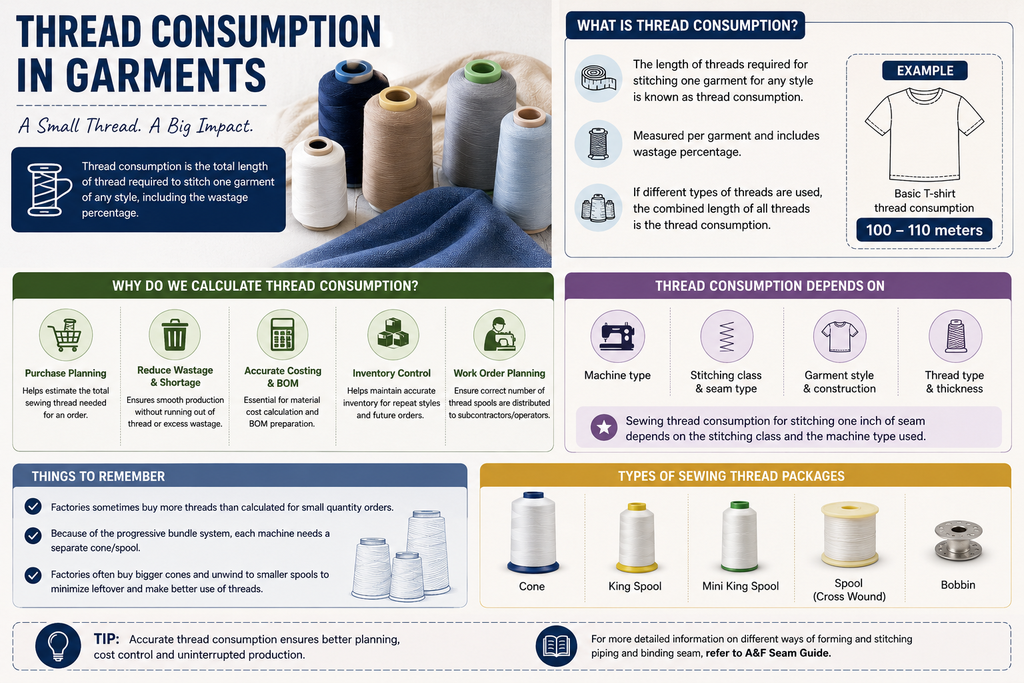
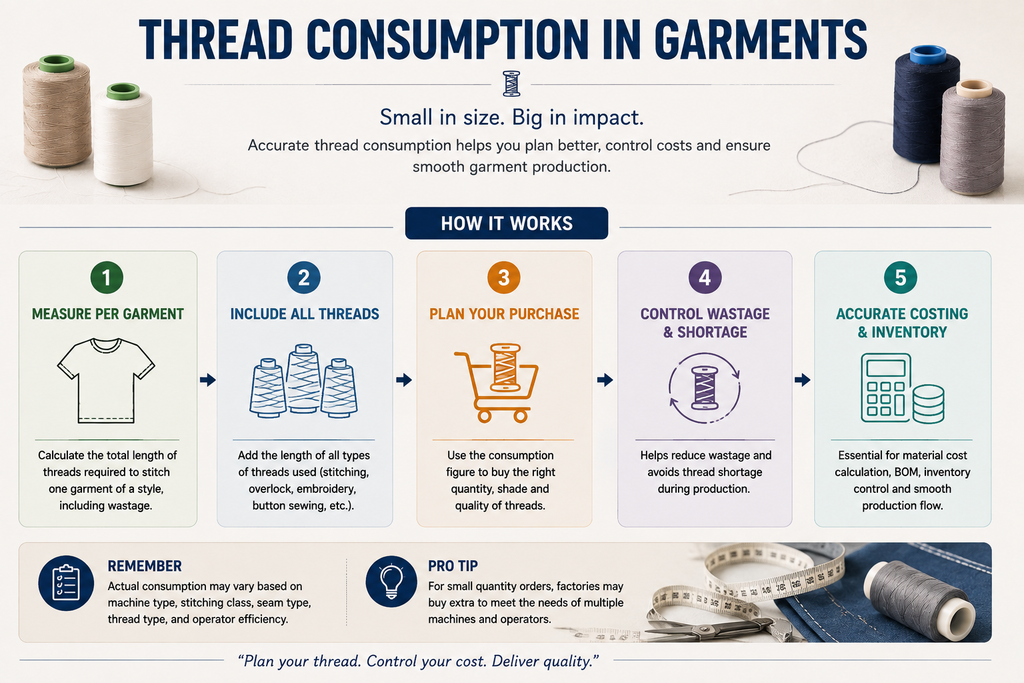
The length of threads required for stitching one garment for any style is known as thread consumption. Thread consumption is measured per garment. In thread consumption, thread wastage percentage is included. In case you need different types of threads for making the garment, the combined length of different threads is the thread consumption for that style. Sewing thread consumption for stitching one inch of seam depends on the stitching class and the machine type used for stitching the seam. For example, thread consumption of a basic T-shirt is 100-110 meters.
Why do we calculate thread consumption?
In mass garment manufacturing, we need to purchase sewing threads specific to an order where we need to match the thread color, thread shade, and thread quality (thickness, thread Tkt, Fibre content, etc.). Sometimes, a factory needs to match thread shade with a Pantone color code (DTM threads). Thread suppliers may need to dye the threads if the thread shade is different than the available shades. Like tailoring shops, factories cannot just buy random threads thinking that threads will be used for future orders. Thread purchase involves a cost, and the garment manufacturer needs to know the amount they are spending on thread purchase for a specific order.
Here are a few reasons for calculating thread consumption:
- To estimate the total sewing thread a factory needs to purchase for an order;
- To reduce wastage of thread and avoid thread shortage for stitching garments of an order.
- For material cost calculation, you need thread consumption (Also needed for making BOM).
- Maintain accurate inventory of threads when you do the same style for a long time.
- Distribution of the correct number of thread spools to the job workers (subcontractors) for the given work orders.
PS: Sometimes, a factory needs to purchase more threads than the calculated consumption for short quantity orders. Because they work in a progressive bundle system and need to split work among many operators, and each machine needs a separate thread cone/spool. It is also observed that factories buy bigger thread cones, unwind the thread cone and make small thread spools to reduce thread leftover and utilize the threads.
How Dinesh Exports Can Help with Your Fabric Sourcing
At Dinesh Exports, we have been working with apparel brands and garment manufacturers for more than three decades, so we understand that successful production depends on how various decisions are made. Including calculating thread consumption.
We have also seen our clients struggle with inconsistent fabric supplies from other manufacturers, and we came in and solved the issue of consistency. If you are looking for a reliable woven fabrics manufacturer, please contact us.
Conclusion
Even though it looks small, the threads are still an important part of production. If you are able to find out the estimate of thread required for your production, then it can help you scale your production. It can also help you buy the right amount of threads, have better calculations of material costs, manage inventory better, and reduce unnecessary wastage.