Finding a sustainable woven fabric manufacturer is an easy task nowadays. What’s difficult is finding a manufacturer that is reliable, delivers consistent high-quality products, and communicates well enough to take your brand to the next level. If you are among the hundreds, or even thousands of people who start their sourcing journey requesting dozens of quotes from various suppliers to find the best one, then this is for you.
First-time or even experienced sourcing managers make various mistakes and we have seen it many times. Like they compare prices first without knowing what they are actually getting. If you are working on launching your new collection or want to expand your sourcing to reliable, sustainable woven fabric manufacturers, then here are the most important things you should look for before choosing the right one.
Why Choosing the Right Manufacturer Matters
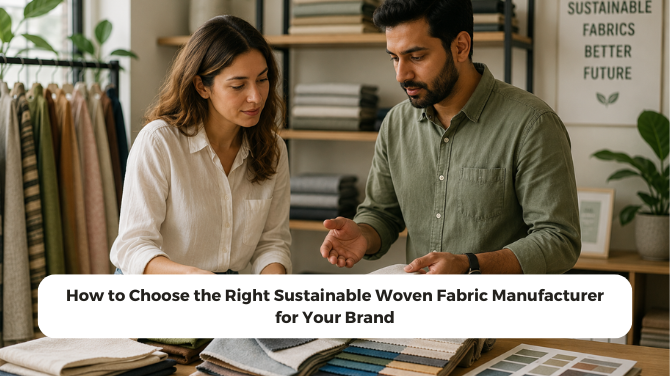
You need to understand that each manufacturer that you are doing business with actually becomes an extension of your business automatically.
Each garment you sell to your customer will start speaking and reflecting both your standards and the manufacturer’s standards. If your supplier messes up, then your customers will know it too.
With the right sustainable woven fabric manufacturer by your side, they will help you take your products to really high standards. Apart from that, you can easily reduce your production delays and support your product development. If you choose your manufacturing partner right, then it will help you save a lot of resources as you grow your business.
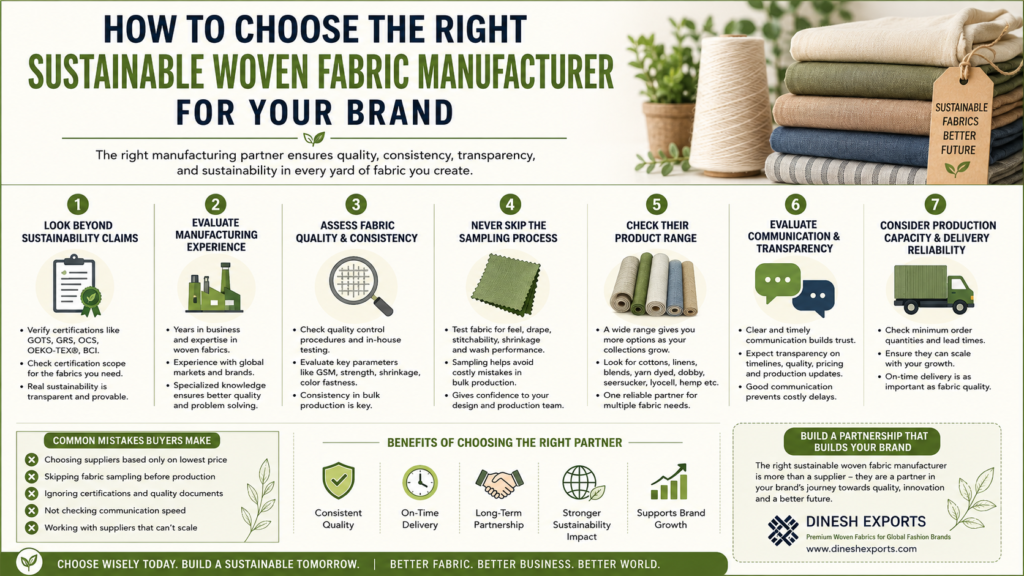
1. Look Beyond Sustainability Claims
Looking at the sustainability certifications is the first thing to do. Even though all the manufacturers claim they have it, some may be duplicating it. A reliable woven fabric manufacturer will be transparent about certifications and will have verified visits from them.
Here are some certifications you can look for in common:
- GOTS
- GRS
- OCS
- OEKO-TEX®
- Better Cotton
If you are looking for a certain type of certification, then feel free to ask for it specifically. If you have the budget, try visiting the manufacturing facility. Send one of your team members to create a genuine connection before you start ordering in bulk.
2. Evaluate Their Manufacturing Experience
Even though the number of experience of a company do not automatically guarantee quality, it is an indicator that they have spent those number of years in the woven fabrics industry. At Dinesh Exports, we have been supplying woven fabrics for more than three decades and all our employees bring with them both technical and hands on experience. We have a strong quality control system combined with experienced technicians and more stable production processes.
If you want to understand more, you can ask questions like:
- How long have you been manufacturing woven fabrics?
- Which export markets do you serve?
- What types of apparel brands do you work with?
- Do you specialize in woven fabrics or produce everything?
If the woven fabric manufacturer that you are speaking with is well versed, they will be easily be able to answer all these questions. They understand the nuances in construction, finishing, shrinkage, and garment performance and can better guide you in your collection decisions.
3. Assess Their Fabric Quality and Consistency
Don’t get blinded when you get the first sample in a perfect condition. Ask for more and see how their quality stands. What we want to look for is consistency in production quality over the long term and no cutting corners. This is what separates the ‘S’ tier manufacturers from the rookies.
You want to ask questions around quality inspections, if they conduct them throughout production and whether they maintain standardized testing for color fastness, shrinkage, GSM, tensile strength, and dimensional stability regardless of the order size.
If you understand technical specifications, it can also helps you compare suppliers more effectively. If you’d like to understand these specifications better, feel free to check out our recent articles on Fabric GSM, Types of Woven Fabric Explained, and Best Fabrics for Fashion Design.
4. Never Skip the Sampling Process
What you need to always avoid is ordering your bulk items just after seeing the swatches or the specifications sheets. Often the swatches may look perfect and the manufacturer can mess it up in bulk production. You don’t exactly know how it’s made and it’s going to look like. This is the reason why we always encourage getting your samples first before production. It will allow you to find the:
- Fabric feel
- Drape
- Stitchability
- Shrinkage
- Color consistency
- Washing performance
- Overall garment appearance
If you are testing all your samples like this before ordering in bulk, then chances are you are avoiding expensive mistakes and doing a favour.
5. Check Their Product Range
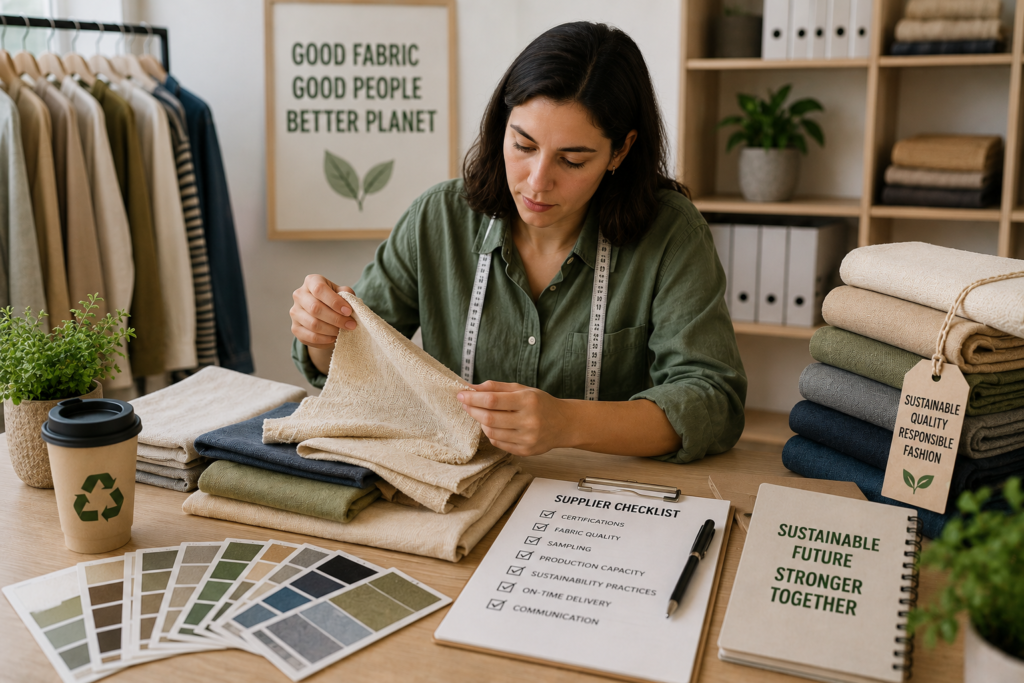
One thing you will notice as you grow your brand is that your requirements also grows with you. You may have started with just one fabric type, but now for your new collections you may require various blended fabrics and fibers to impress your clients. This is the reason why it is important to check the product range of the woven fabric manufacturer. At Dinesh Exports, we work with all type of woven fabrics such as cotton, lyocell, hemp, linen etc. and also various constructions like seersucker fabrics, yarn-dyed checks, linen blends, or sustainable fibers like Lyocell and hemp blends.
This will help you solidify your sourcing into a single manufacturer to get started. You don’t need to be communicating with multiple vendors all the time. That requires a lot of resources to manage.
Check out our recent articles on Cotton Blend Fabric, Linen Blend Fabric, and Lyocell Fabric Manufacturers in India to understand which fabrics suits different garment categories and let us know if you have any questions.
6. Evaluate Communication and Transparency
What frustrates fabric buyers the most is when the manufacturers do not reply to them in real time. Things like delayed replies, unclear production timelines, missing technical information, and incomplete updates are stressful to your mind and business.
A professional woven fabric manufacturer will be able to communicate clearly about things like:
- Production timelines
- Sampling progress
- Fabric availability
- Certifications
- Quality testing
- Delivery schedules
This is the reason why we say good communication helps prevent misunderstandings and builds trust throughout the sourcing process.
7. Consider Production Capacity and Delivery Reliability
The real test is when you submit your first bulk order and you receive it. That is exactly when you will see the result of the month ling negotiations and back and forth communications. At times, you will need various fabrics in various quantities. Some fabrics you may need in few thousand meters, other, you may need them in 10’s of thousands or even 100’s of thousands of meters. So it is important for you to note down the woven fabric manufacturers capacity as well. If you want to know more about their production and delivery capabilities, you can ask questions like:
- What are your minimum order quantity requirement?
- Can you handle seasonal demand?
- What is your average production lead time?
- Do you have experience exporting internationally?
- How do you maintain quality during large production runs?
Once you get answers to questions like these, you will be able to judge their capabilities more easily.
Common Mistakes Buyers Make
Lets look at some of the common mistakes buyers make while choosing a reliable woven fabric manufacturer.
- You choose suppliers based only on the lowest quotation.
- You skip fabric sampling before production.
- You ignore certifications and quality documentation.
- You do not check communication speed before placing orders.
- You work with suppliers that cannot scale production.
If you follow the things we talked about in this article, then you will be able avoid the most common ones easily.
Working With Dinesh Exports
Dinesh Exports have been working with new fashion buyers since the 1990’s. We have grown with some of the brands we worked with, both in production and delivery capabilities. We grew from a few people to now more than 200 full time employees.
Here are some more resources to help you get started with your business:
- Best Fabrics for Fashion Design
- Types of Woven Fabric Explained
- Cotton Blend Fabric Guide
- Linen Blend Fabric Guide
- Lyocell Fabric Manufacturers in India
For woven fabric enquiries, please contact us.
Final Thoughts
If you are going on a journey of finding your next supplier, then the lowest quotation is not the metric you want to look for. What you need to be looking for is how the quality is staying consistent, they are communicating without much delays, provide technical support where you lack, and are aligned with your growth trajectory.
You also need to take enough time to evaluate the manufacturers sustainability certifications, their sampling processes, production and delivery capabilities etc before you become their customer. Always remember this: “A good manufacturer simply supplies fabric. The right manufacturer becomes a valuable partner in your brand’s growth.” Hope this was helpful.
Frequently Asked Questions
What do I need to look for in a sustainable woven fabric manufacturer?
You need to be looking for the manufacturer’s certifications, consistent fabric quality, manufacturing experience, transparent communication, reliable sampling, and the ability to meet your production requirements.
Are sustainability certifications important?
Of course because sustainability certifications such as GOTS, GRS, OCS, and OEKO-TEX® provide independent verification that specific to environmental and social standards are being followed.
Should I always request fabric samples?
Absolutely, you always need to get the samples first to ensure that the final fabric looks and feels exactly like you agreed on.