TL;DR
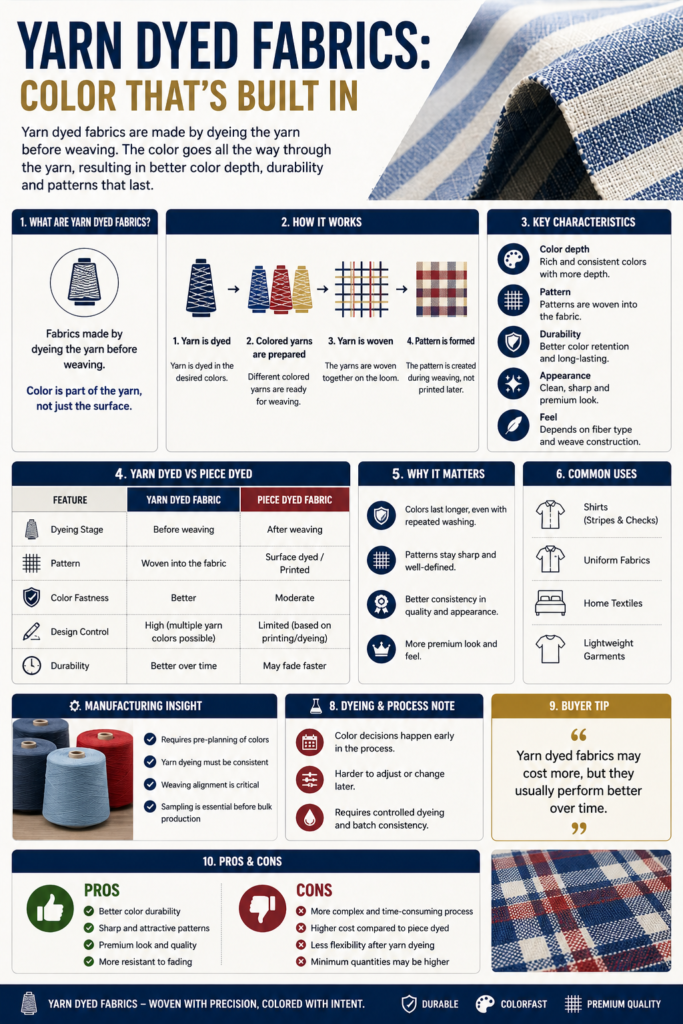
Yarn dyed fabrics are made by dyeing the yarns before weaving. Compared to piece dyed fabrics, this results in better color depth, increased durability and patterns that do not fade easily.
Check out our digital fabric swatch here
It Looks Simple, But It’s Not
At first glance, yarn dyed fabrics don’t seem very different. You see a striped shirt or a checked fabric, and it feels like just another design choice. But the way that pattern is created is completely different from regular dyed fabrics.
And that difference shows up later. Not immediately, but after washing, after wear, after a few production cycles. That’s usually when people start noticing it.
What YD Fabrics Actually Mean
Yarn dyed fabrics are made by dyeing the yarn first, and then weaving it into fabric.
So instead of dyeing the finished fabric surface, the color is already inside the yarn before the fabric is constructed. It sounds like a small change in process, but it affects almost everything, from how the fabric looks to how it performs.
If you’ve already explored how structure impacts performance in woven fabrics, this is another layer where process makes a difference.
The Difference You Notice Later
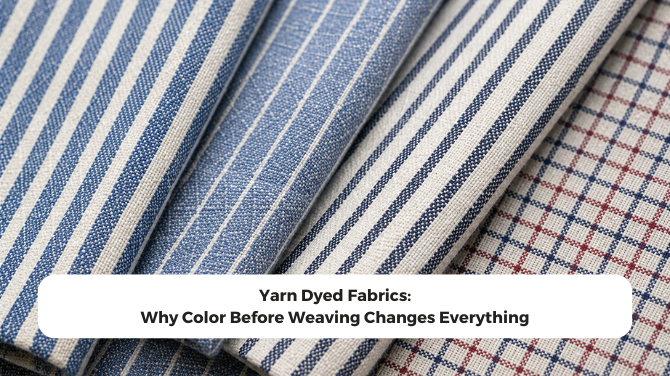
One of the biggest differences shows up over time. With yarn dyed fabrics, the color tends to hold better. It doesn’t fade as quickly, especially in patterns like stripes or checks. That’s because the color runs through the yarn, not just on the surface.
In comparison, piece-dyed fabrics are dyed after weaving, which means the color sits more on the outer layer. It’s not always obvious on day one, but after a few washes, the difference becomes clearer.
Patterns Are Built, Not Printed
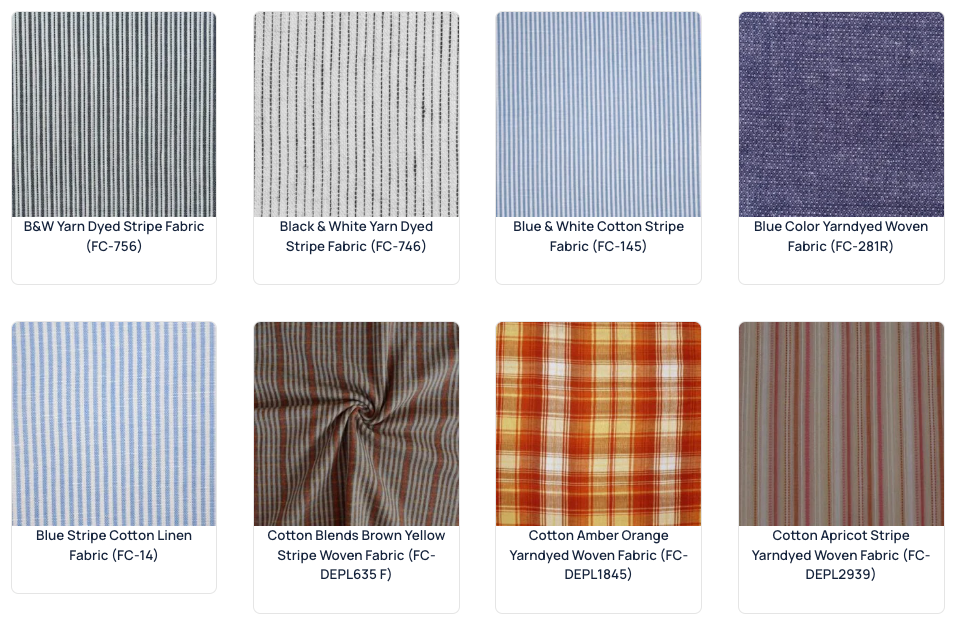
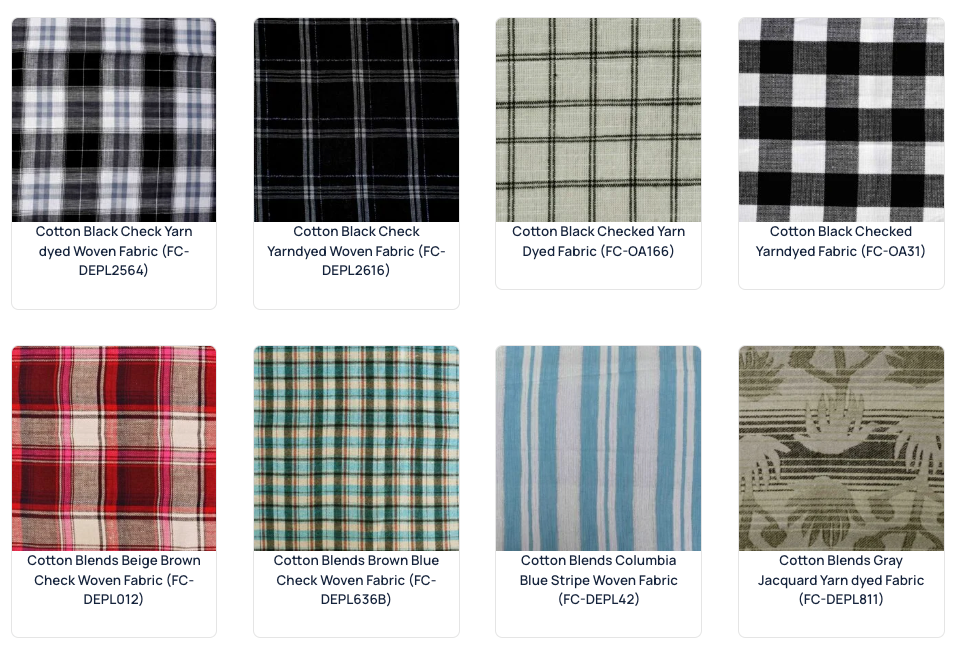
This is where yarn dyed fabrics really stand out. Patterns like stripes, checks, or plaids are created during the weaving process itself. Different colored yarns are arranged in a specific order, and the pattern forms as the fabric is woven.
So the design is not added later. It’s part of the fabric structure. That’s also why these patterns tend to look sharper and more consistent. Compared to surface-level finishes, like what you might see in some plain weave fabric with printing, yarn dyed patterns feel more integrated.
It’s Not Just About Looks
A lot of people think yarn dyed fabrics are only about appearance. But there’s more to it.
Because the yarn is dyed beforehand, it often goes through more controlled processing. That can result in better color fastness and sometimes even improved fabric stability.
It doesn’t mean every yarn dyed fabric is better, but the process gives it an advantage when done right.
Where YD Fabrics Are Commonly Used
You’ll see yarn dyed fabrics most often in shirts. Especially in stripes and checks. Formal shirts, casual shirts, even some uniforms rely on yarn dyed constructions because of their clean appearance and durability. They’re also used in home textiles and certain lightweight garments where pattern clarity matters. Compared to something like cotton slub fabric, which focuses more on texture, yarn dyed fabrics focus more on visual structure.
The Role of Weaving in YD Fabrics
Weaving plays a big role here. As the yarns are pre-colored, it is the weaving process that dictates the color interaction, and different weaves can alter the pattern or the reflection of light on the surface. For example, a simple weave can create a different visual effect, depending on the distribution of the yarn colors. This is the importance of sampling, not only in terms of color, but also in terms of overall appearance.
Dyeing Needs More Planning
Unlike piece dyeing, where color decisions can be made later, yarn dyeing requires planning upfront. You need to decide the colors before weaving even begins. This adds complexity, especially for designs with multiple shades or detailed patterns.
We’ve seen similar challenges discussed in criteria for selecting dyes by fibre content, where choosing the right dye and process early on affects the final result.
Sampling Tells You the Real Story
On paper, yarn dyed fabrics can look perfect. But the sample is where things become real. You start to see how the colors interact, how sharp the pattern looks, and whether the overall feel matches the requirement.
Sometimes, a pattern that looks good in theory feels too busy in fabric form. That’s why sampling, like we’ve seen in woven sample, becomes an important step before bulk production.
A Small Observation From Experience
Yarn dyed fabrics usually don’t cause problems at the start. Issues, if any, show up later.
Color matching across batches, pattern alignment, consistency in weaving. These are things that matter more in production than in sampling. But when everything is controlled well, the result is usually more stable compared to other dyeing methods.
About the Supplier Behind These Fabrics
Working with yarn dyed fabrics requires coordination between dyeing and weaving. Since the yarn is colored before construction, even small inconsistencies can affect the final pattern.
Dinesh Exports has been working with woven fabrics for over three decades, including yarn dyed constructions across different fabric types. Our process usually focuses on maintaining consistency from yarn dyeing through to weaving and finishing, which becomes important when patterns and color alignment are involved.
We work with certified materials and processes, which helps meet export requirements and buyer expectations. For anyone sourcing yarn dyed fabrics, that level of coordination can make a noticeable difference in the final outcome. For more details or enquiries, please contact us.
Final Thoughts
Yarn dyed fabrics are not just about color. They’re about when that color is introduced into the process. By dyeing the yarn first, the fabric gains a level of depth and durability that’s hard to achieve later. It takes more planning and control, but when done right, the result tends to hold up better over time.
Frequently Asked Questions
What are YD fabrics?
Yarn dyed fabrics are made by dyeing the yarn before weaving it into fabric.
Are YD fabrics better than piece dyed?
They often have better color durability and pattern clarity, but it depends on the application.
Where are YD fabrics used?
They are commonly used in shirts, uniforms, and patterned textiles.
Do YD fabrics fade?
They can fade over time, but usually less than piece-dyed fabrics.
Why are YD fabrics more expensive?
Because the process requires additional planning and controlled dyeing before weaving.