TL;DR
Every woven fabric relies on getting the yarn right for production. The manufacturing process and the end result depend on the type of yarn, spinning method, and the yarn count, resulting in distinct fabric feels, performance, and durability.
The Cotton Yarn Decides More Than They Think
The Cotton Yarn Decides More Than They Think A fabric is inspected by touch. People look for the fabric softness, texture, weight, and appearance when they are judging a piece of fabric. These are the features that get noticed immediately. But do you know what’s interesting here? The fact that all these characteristics were already decided much earlier. Even before the weaving process, when deciding what type of yarn to use. The yarn plays a huge role that most people may not think of. For example, two fabrics can look similar from a distance and still have completely different characteristics because of the yarns used to make them.
What Cotton Yarn Actually Means
Cotton yarns are made by spinning cotton fibers together into a continuous thread. Once we have the finished thread, it is then used for weaving fabric. This is a simple process, but it can be equally technical and challenging. The process will change depending on the type of cotton, the spinning method used, and the final application. This is the reason why all cotton yarns feel different. While some yarns feel smooth, others feel compact. And some yarns are soft, more open, and slightly even. A lot of the final fabric feel starts here.
The Quality Starts With the Fiber Itself
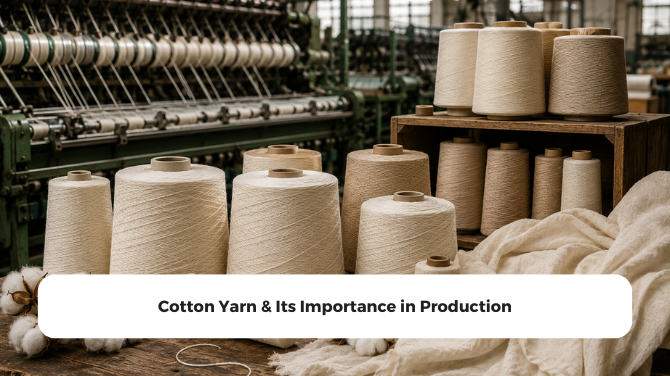
Raw cotton is sourced for the manufacturing of yarns, and it determines how the yarn will turn out. The length of the fiber, cleanliness, and the strength all affect the final yarn quality. For smoother and stronger fibers, longer fibers are used for the yarn manufacturing. Shorter fibers used in the manufacturing of yarns results in rougher and less stable yarns, depending on how they are spun. This is the reason why we say sourcing is important very early in the fabric production stage.
How Cotton Yarn Is Made
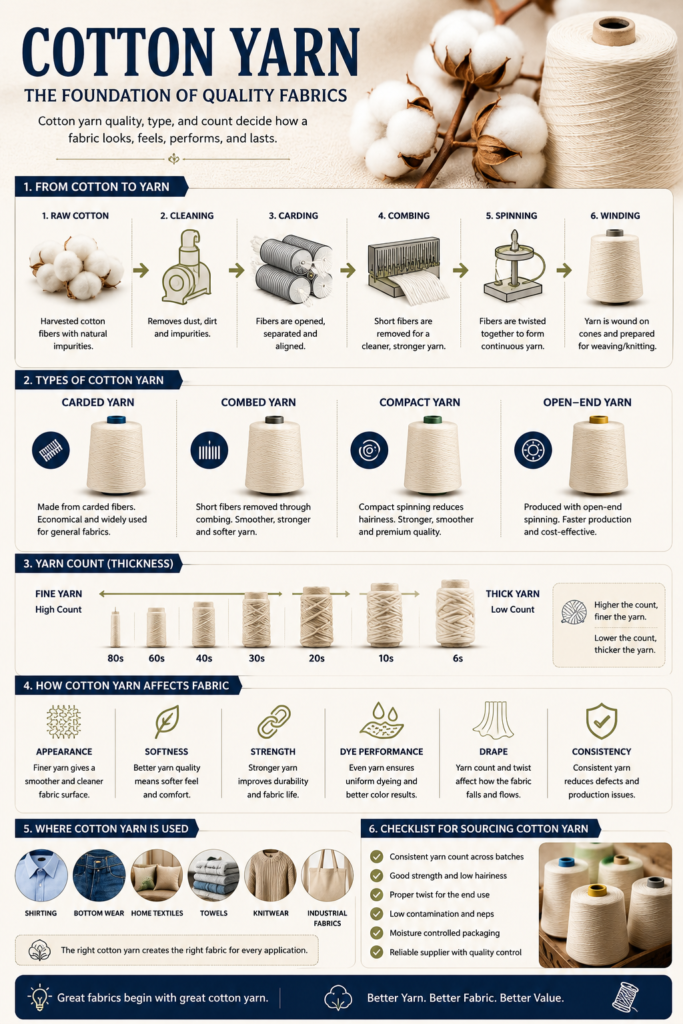
Now, let’s look at how cotton yarns are actually made. The process starts by cleaning raw cotton. Once its cleaned, it is then passed through carding, this is where raw cotton is aligned and separated. In some cases, combing is also added to remove short fibers and improve the overall yarn quality. Once this is done, the raw material is sent for spinning. Spinning is the process of twisting together the cotton to form yarn. The amount of twist determines how the yarn behaves when the process is completed. Manufacturers control the number of twists to make the yarn harder or softer. The more number of twists means the yarn is stronger. Once spinning is completed, the yarn is then wound and prepared for the weaving process.
Different Types of Cotton Yarn
Now that we know each cotton yarn is not made the same way, there can be different cotton yarns. Carded yarns are the most common and a slightly refined type of yarn. It will still perform well for many applications, especially where extreme smoothness is not necessary. Then we have combed yarns, which are sent through an additional process to remove shorter fibers. So the fibers stay tighter together, giving the yarn a smoother and more premium appearance. Then there is another category of yarns called the open-end yarn. It is generally faster and more economical to produce, but these yarns usually feel different compared to ring-spun yarns. Each cotton fiber has its place in the industry; it’s used based on requirements.
Yarn Count Changes the Entire Fabric
Let’s talk yarn count. This is an area most people overlook in the beginning. Yarn count will affect the fabric weight, softness, breathability, and even appearance. A finer yarn creates a lighter and smoother fabric. A thicker yarn usually creates a heavier and more textured construction. For example, the fabric used for shirting is often made up of finer counts of yarn because they need a cleaner surface. And heavier fabrics like canvas fabric use thick counts for their distinct durability feature. Even if cotton slub fabric, the yarn itself creates the texture before weaving is part of the equation. This means yarn count is a crucial part of the woven fabric manufacturing process.
The Spinning Method Matters More Than Expected
Apart from the yarn count, spinning is another yarn manufacturing step that can alter the final product. First up, we have the ring-spun yarns, which are generally softer and stronger because the fibers stay more aligned. Then we have open-end yarn, these are faster to produce and more economical in nature. But the problem is that the surface can be slightly rougher. Finally, we have compact spinning, which creates an even cleaner structure with less hairiness. Sometimes two fabrics use the same cotton and the same count, but the spinning method alone makes them feel entirely different.
Yarn Dyed and Greige Yarn Are Not the Same
Even the final yarns used for weaving are two different yarns. Some people may get confused with this. For yarn-dyed fabrics, the yarn is dyed before the weaving process. Greige yarn remains undyed initially but it is dyed once the fabric is woven. This will change the appearance of the fabric. We discussed something similar in yarn-dyed fabrics, where the process affects long-term color consistency.
Where Cotton Yarn Is Commonly Used
Cotton yarns are used almost everywhere, whether it is textiles for shorts, bottom wear, home textiles, towels, knitwear, industrial fabrics, and so on. Different yarn structures are selected depending on what the fabric is used for. Finer yarns usually appear in lightweight fabrics, and coarser yarns in heavier construction. In some cases, blends of these yarns are also seen to improve stretch, durability, or moisture handling.
Small Yarn Problems Become Bigger Fabric Problems
If you have made it this far, you know that a small change in the production of yarns can alter the final product. Even small inconsistencies in the yarn can lead to bigger problems in the fabric. Especially if you are a large manufacturer. This is why woven fabric manufacturers like Dinesh Exports excel in this area. With three decades in the industry, we are able to manufacture any type of woven fabrics as per the client’s requirements. We look for uneven yarn tension, contamination, and count variation to make sure the final fabric appearance is as per the client’s request. Patterned constructions like the jacquard fabric, these issues become more visible because the structure highlights inconsistencies more easily. This is the reason why the toughest and most standardized yarn quality control matters in woven fabric manufacturing.
Sampling Usually Reveals the Truth
We always deliver samples to our clients to make sure they verify how the final fabric will look. When you are working with a manufacturer, the yarn specification may look good on paper. But once the fabric is woven into the final product, the actual behavior of the fabric becomes visible. We cannot emphasise the importance of sampling in woven fabric manufacturing. In our recent article on woven samples, we talked about this at length; do check it out.
Checklist for Sourcing Cotton Yarn
1. Yarn count consistency
2. Review hairiness, twist level, and strength
3. Check for any contamination
4. Lab results for moisture control
Working With a Yarn or Fabric Manufacturer
Cotton yarn affects all the stages in the woven fabric production process. Because of the yarn quality, the final product can be a disaster. Considering all these issues that can occur during the manufacturing process, it is important that you choose a woven fabric manufacturer like Dinesh Exports Pvt Ltd as your partner for large-scale woven fabric requirements.
We have been working with brands both domestically and abroad, catering to their various woven fabric needs. If you are looking for a reliable woven fabric manufacturer in India, then feel free to contact us.
Final Thoughts
Cotton yarn decides how the final woven fabric appears. The production process of the yarns impacts the softness, texture, and durability of the fabric. Choosing a manufacturing partner that follows a strict quality check across the production of both yarns and fabric is important for all fabric buyers.
Frequently Asked Questions
What is cotton yarn?
Cotton yarns are made by spinning cotton fibers together for weaving or knitting
What are the main types of cotton yarn?
Four types of cotton yarns are carded yarn, combed yarn, compact yarn, and open-end yarn.
What does yarn count mean?
Yarn count means how thick or fine a yarn is.
Which cotton yarn is best for shirts?
Finer combed fabric yarns or compact yarns are the best for shirting fabrics.