TL;DR
Sustainable fabrics are changing the industry and how it operates. These types of fabrics are special and made with resources that are more environmentally friendly. This does not mean that it only focuses on the fiber being natural, but also the process behind the complete woven fabric production, like the sourcing, dyeing, finishing, transporting, etc., and how the final product performs over time.
Check out our digital swatch here
Everybody Talks About Sustainable fabrics now. But The Meaning Keeps Changing
Sustainable fabrics used to be a term used in a small circle of passionate fabric enthusiasts. But nowadays, it’s used by every person linked to fabric production and consumption. Buyers are now specifically asking for sustainable fabrics, retailers are promoting them extensively, and everyone expects that the manufacturers adapt to these requirements quickly.
One interesting thing about this term being used widely is that each one of them has a different meaning. While some say it means using recycled water, some say it is focusing on biodegradability and saving electricity. But this is not true; the reality is that it involves all of these things together.
What Sustainable Fabrics Actually Mean
It means adapting to a new form of fabric production, starting from lowering the use of water, harmful chemicals, raw material recycling, renewable fibers, and a cleaner overall manufacturing process. This is completely different from the conventional fabric manufacturing process we have right now. This is the reason why we say that sustainability is not just a single thing.
Let’s understand this concept a little bit more in-depth. Imagine a natural fiber like cotton or linen, but it can still be produced using highly toxic chemicals, making in non sustainable. In the same way, there are recycled fibers that are made using the least amount of water and that are biodegradable. This is the reason why the term sustainability is actually complicated once you start going beyond the marketing term.
The Industry Is Changing Because Buyers Are Changing
Even a few years back, people and brands were only focused on getting their products at the least cost possible. But as the market matured and people started getting informed in the new age, they started asking many questions. Questions like what type of yarn was used, were the workers paid enough, did they have good working conditions, are there any certifications available to verify various claims, and so on. For this reason, fabric manufacturers are forced to change and make compliance and sustainability a part of their reporting and daily conversations. This is especially true for export markets like the EU and the US.
Top 5 Sustainable Fabrics Used Today
1. Organic Cotton
Compared to conventional cotton fabrics, organic cotton fabrics are manufactured without using any synthetic pesticides or genetically modified cotton seeds. This reduces the negative impact it has on nature.
As we discussed earlier, just making farming natural does not mean that it is sustainable. Manufacturers need to make sure that the spinning, dyeing, and finishing are also sustainable. We discussed something similar in our article on cotton yarns.
2. Hemp Fabric
In India, hemp is grown in nature without any need for special farming. It also uses the lowest amount of water to grow, and they grow pretty quickly. This is the reason why hemp fibers and hemp fabrics are becoming popular in India right now. It is similar to cotton, with its breathable, strong, and natural textures. Thanks to the latest innovations in spinning and yarn development technologies, hemp yarns are now better. We are already seeing a lot of brands using hemp with cotton and other fibers to blend them and make better-looking and functioning fabrics and clothing.
3. Tencel™ / Lyocell
Lyocell fabrics are made using a process where wood pulp is passed through a closed-loop process. It was an answer to polyester fabrics, but a sustainable version. The company called Tencel then made it popular, which is why you see Lyocell and Tencel used synonymously together. The yarns are super soft, hence making the fabrics soft and smooth. Brands advertise their clothing with terms like Lyocell and Tencel to make sure their buyers know that it is special.
4. Recycled Polyester
Whenever people hear polyester, they instantly associate it with non-sustainable and harmful production methods. Also, the harmful effects of it on the environment. We have all seen pictures of polyester fabrics in the dumpster. Because of this reason, many believe that polyester cannot be sustainable. This is not true today; recycled polyesters are actually good for nature. It reduces plastic waste like PET bottles and turns them into yarns and then fabrics. We can see this type of fabric used heavily in performance-related clothing.
5. Linen Fabric
Linen is one of the oldest fibers in existence, once worn by the royal family across the world. It is made from flax fibers, similar to cotton production, but requires less water and chemicals. It is commonly used in clothing for the summer. It is highly breathable and durable.
Sustainable Fabric Certifications Matter More Than People Realize
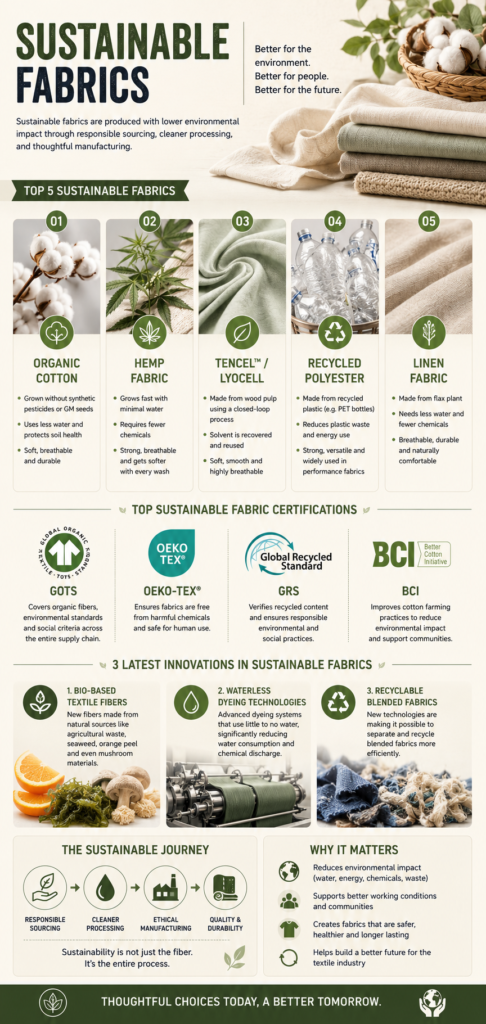
As we saw now, sustainability has become a loosely used term, and the global manufacturing wanted to make this acceptable without going through the testing each time they make a purchase from a buyer. Now manufacturers can claim their fabrics are sustainable and then prove it with globally recognized certifications. Buyers are now hesitating to buy sustainable products without any certifications. This is the new normal.
Some Of The Most Common Sustainable Fabric Certifications
GOTS (Global Organic Textile Standard)
This certification focuses on the use of natural fibers, chemical usage in processing, and social criteria along the production line, like fair wages and working conditions. This is a really popular certification.
OEKO-TEX®
This certifies whether the final fabric contains any harmful chemicals that are poisonous to human beings.
GRS (Global Recycled Standard)
This is a sustainable certification recognized for its ability to certify recycled materials. It certifies that the recycled content is also sustainable and good for the environment while following social and workplace requirements.
BCI (Better Cotton Initiative)
As the name suggests, it’s a certification specifically for cotton. BCI makes sure that the cotton production process is ethical and not harmful to the environment and the people making them. The cotton industry is highly known for using children to collect the yields at low cost.
Sustainability is all about the entire process, from yarn production to the final product. This is ignored by many people. In our recent article, we discussed the criteria for selecting dyes by fibre content. Feel free to check it out for more details on this topic.b
2 Latest Innovations In Sustainable Fabrics
1. Bio-Based Textile Fibers
This is a type of innovation that is turning waste materials into useful fabrics. Manufacturers are using agricultural waste from pineapple, banana, seaweed, orange, etc., to create yarns and fabrics. Even though these are still in early development stages, the industry is already giving positive signs of acceptance or eagerness.
2. Waterless Dyeing Technologies
Textile production is notorious for its use of water. Many rivers and lakes have been destroyed by companies around the world manufacturing textiles. This is the reason why waterless dyeing technologies are popping up. It uses CO2-based processing instead of using conventional dye baths.
Sampling Still Matters In Sustainable Fabrics
Even if a manufacturer claims to have all the sustainability certifications, it is important to always sample your woven fabrics. We have talked about the importance of sampling in one of our earlier articles; feel free to check it out. By focusing more on the sustainability part, some manufacturers may forget to focus on delivering the right product as per your requirements. This is why we say always work with woven fabric manufacturers like Dinesh Exports for consistent, high-quality, sustainable products.
Working With A Sustainable Fabric Manufacturer
Dinesh Exports has been working with brands both domestically and internationally for over three decades, and we were keen to adopt the global sustainability requirements. We have constantly improved our processes across production, like saving energy, paying standard wages, no child labour, and so on.
We are one of the growing woven fabric manufacturers in India that meet the diverse client requirements while keeping sustainability at the forefront. If you like to learn more about our certifications, please contact us.
Final Thoughts
Sustainable fabrics are no longer a fancy term; it is expected by most of the buyers around the world, and manufacturers are forced to adapt to standards quickly. It not only focuses on the selection of natural fibers, but also on the entire fabric manufacturing process. There are various global sustainable woven fabric certifications available out there, and buyers need to verify if the company they are buying from has a valid certification that they are looking for.
Frequently asked questions
What are sustainable fabrics?
It is a type of fabric that is manufactured using the latest production process that does not involve harming nature, whether it is in farming or production. It also looks for societal norms like giving fair wages and working conditions to employees.
Which fabric is the most sustainable?
There are multiple sustainable fabrics available; the most common ones are cotton, hemp, linen, lyocell, and recycled polyester.
Why are sustainable fabrics expensive?
Yes, they come with a premium price because of the use of ethical sourcing, cleaner production process, and stricter compliance.
What certifications should buyers look for?
The common sustainability certifications are GOTS, OEKO-TEX, GRS, and BCI, depending on the fabric category.