TL;DR
Cotton yarn is the basic building block of most woven and knitted fabrics. Its quality depends on fiber length, spinning method, and count. Choosing the right cotton yarn is not just technical, it directly affects fabric feel, durability, and final garment performance.
It Starts With Yarn, Not Fabric
Most people jump straight into fabric. GSM, weave, finish, price. But the reality is, everything starts much earlier. At yarn level. If the yarn is inconsistent, no amount of finishing will fully fix it. You might improve the look, but the underlying behavior stays the same. That’s why understanding cotton yarn matters more than most people think.
What Is Cotton Yarn, Actually?
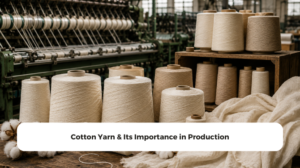
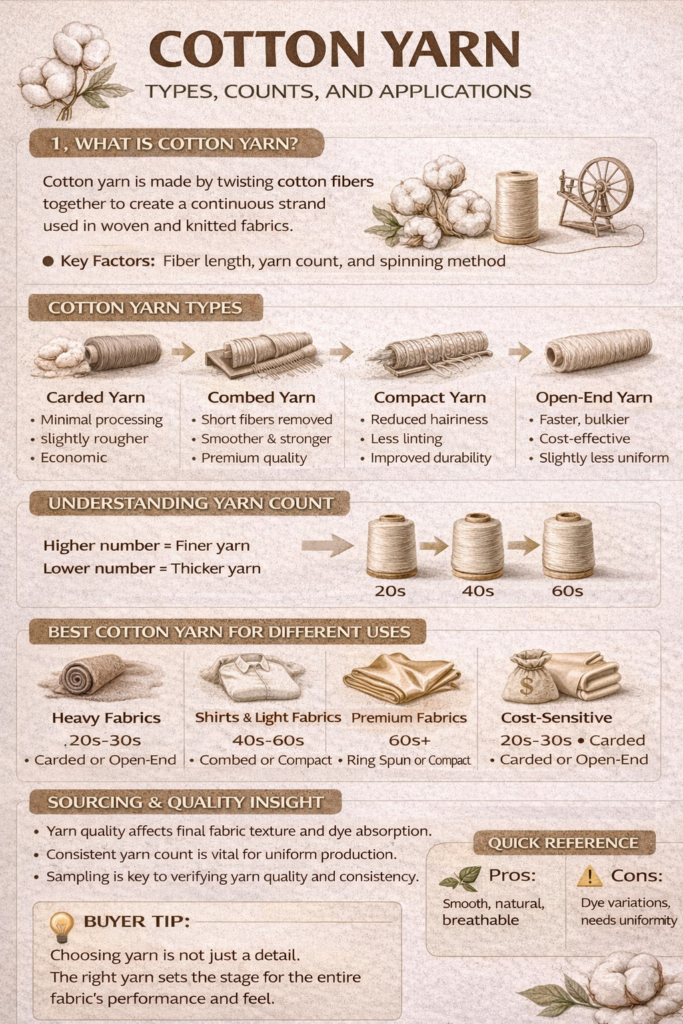
Cotton yarn is made by twisting together cotton fibers to create a continuous thread. That strand is what gets woven or knitted into fabric. Sounds straightforward, but there are multiple variables involved, like fiber length, fiber quality, twist level, and spinning method. Each one of these changes how the yarn behaves. And once it becomes fabric, those differences show up in ways that are hard to ignore.
Check out our digital swatch here
Not All Cotton Fibers Are the Same
This is where things quietly start to split. Cotton fibers vary in length and quality. Short staple cotton is more affordable but tends to produce slightly rougher yarn. Long staple and extra long staple cotton produce smoother, stronger yarn. That’s why premium fabrics often feel cleaner and more consistent. Because the fiber itself was better to begin with.
Yarn Count Is Where Most Confusion Happens
If you’ve ever seen terms like 20s, 40s, 60s, this is what it refers to. Yarn count. And here’s the simple way to think about it. Lower count means thicker yarn. Higher count means finer yarn. So a 20s yarn is thicker than a 60s yarn. Thicker yarns are usually used for heavier, more durable fabrics. Finer yarns are used when you want a smoother, lighter feel. But here’s where it gets practical. Higher count does not automatically mean better. It just means finer. The “right” count depends entirely on the end use.
Carded vs Combed Cotton Yarn
This is one of those terms that shows up often in sourcing conversations. Carded yarn is made with minimal processing. Some shorter fibers remain, which makes it slightly less smooth but more economical. Combed yarn goes through an additional process where shorter fibers and impurities are removed. The result is cleaner, smoother, and more uniform yarn. You’ll feel the difference immediately in the fabric. Especially in applications where surface quality matters.
Compact Yarn and Why It’s Getting Popular
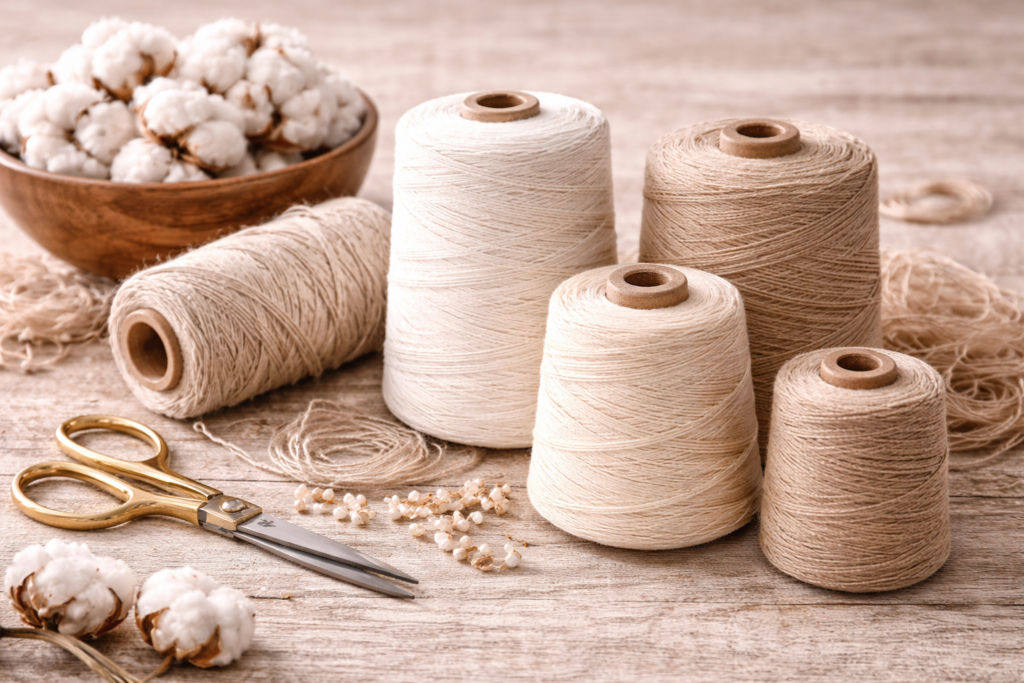
Compact yarn is a more refined spinning method. It minimizes fuzziness and boosts the strength of the yarn. Essentially, the fibers are compressed more closely. This leads to less lint, a smoother surface, and greater longevity. While not always required, it’s frequently the choice for high-end textiles.
Open-End vs Ring Spun Yarn
Here’s another key difference. Open-end yarn is quicker to make and generally more affordable. It’s often thicker and a bit less consistent. Ring spun yarn, on the other hand, is the older method. While it takes longer to create, the end product is a stronger and smoother yarn.
If you’re working on basic products where cost matters, open-end works fine. But if the fabric needs to feel refined, ring spun is usually the safer choice.
Twist Matters More Than You Think
Yarn twist is rarely discussed in detail, but it changes fabric behavior. Higher twist makes yarn stronger but slightly harder. Lower twist makes it softer but less durable. So again, it’s a balance. For example, softer fabrics like those discussed in cotton woven fabric often use controlled twist levels to maintain comfort without compromising too much strength.
How Cotton Yarn Affects Fabric Structure
This is where everything connects. The same weave can feel completely different depending on the yarn used. Take something like twill fabric. Using a coarser yarn will give it a more rugged feel. Using a finer yarn will make it smoother and more refined. Even textured constructions like dobby fabrics behave differently depending on yarn consistency. So when people say “fabric quality”, a big part of that is actually yarn quality.
Choosing the Right Cotton Yarn for Different Uses
This is where practical decisions come in. For heavy-duty fabrics, thicker yarn counts work better. It gives structure and durability. For shirts or lightweight fabrics, finer yarn counts are preferred because they feel softer and more breathable. Combed or compact yarn is frequently employed in high-end applications to enhance surface quality. However, for products where cost is a primary concern, carded or open-end yarn remains a viable option. There’s no single best option. It always comes down to the end use.
Dyeing Behavior Starts at Yarn Level
This is something many overlook. Yarn quality directly affects dyeing results. If the yarn is uneven, the fabric may show shade variations. If fiber quality is inconsistent, dye absorption can vary. We’ve seen similar challenges in the criteria for selecting dyes by fibre content, where fibre characteristics influence the final color. With cotton yarn, these variations start early.
Sampling Is Where Yarn Quality Becomes Visible
On paper, yarn specs can look perfect. But once the fabric is made, reality shows up.
The uneven texture, surface hairiness, and shade inconsistency. That’s why sampling is critical. We’ve seen how early-stage evaluation helps in reducing garment sample development time, and yarn selection plays a role in that too.
Sourcing Cotton Yarn for Export Orders
When it comes to exports, consistency matters more than anything else. It’s not just about getting one good batch. It’s about maintaining the same quality across production. That includes consistent yarn count, uniform twist, and stable fiber quality. Because even small variations can affect the final fabric. And those differences become visible at scale.
A Small Reality Check
Cotton yarn sounds basic. But it’s where most fabric issues quietly begin. If the yarn is right, everything else becomes easier. If it’s not, you end up compensating later. With finishing, with adjustments, sometimes even with rework.
Watch a video on Cotton Yarn Explanation: Cotton Yarn Explained: Pros, Cons & Best Crochet Projects
Final Thoughts
Cotton yarn is not just a raw material. It’s the foundation. Every decision made at this stage carries forward into fabric and finally into the garment. Once you start looking at fabrics through the lens of yarn, a lot of things begin to make more sense. And sourcing becomes a lot more predictable. If you have various yarn size and spin woven fabrics, please contact us.
Frequently Asked Questions
What is cotton yarn used for?
It is used to produce woven and knitted fabrics for apparel, home textiles, and industrial applications.
What is the difference between carded and combed cotton yarn?
Combed yarn is smoother and more refined because shorter fibers are removed. Carded yarn is more economical but slightly rougher.
What does yarn count mean?
It refers to the thickness of the yarn. Higher count means finer yarn, lower count means thicker yarn.
Which cotton yarn is best for premium fabric?
Combed or compact yarn made from long staple cotton is usually preferred for premium applications.