TL;DR
Plain weave fabric is the most basic and frequently employed weave. It’s known for its strength, balance, and adaptability, though it might not be the softest or most pliable option. Its dependability, however, is the reason it’s found in so many different applications.
It’s the Simplest Weave… But That’s the Point
Plain weave fabric is not a complex construction. There are no fancy patterns, no long floats, and no design tricks. It follows a very basic structure where the warp goes over the weft, then under, and repeats. That’s it.
And somehow, that simplicity is exactly why it’s used almost everywhere. It does what it needs to do without adding complications, which in production actually matters more than people expect.
Download 2026 Digital Swatch Card Here
What Is Plain Weave Fabric?
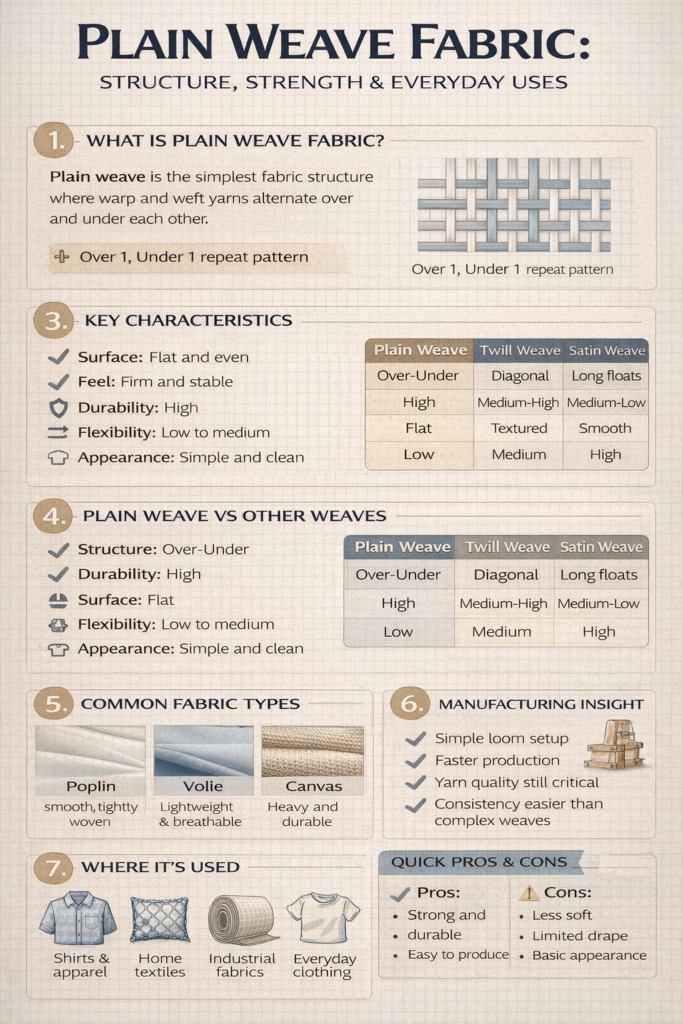
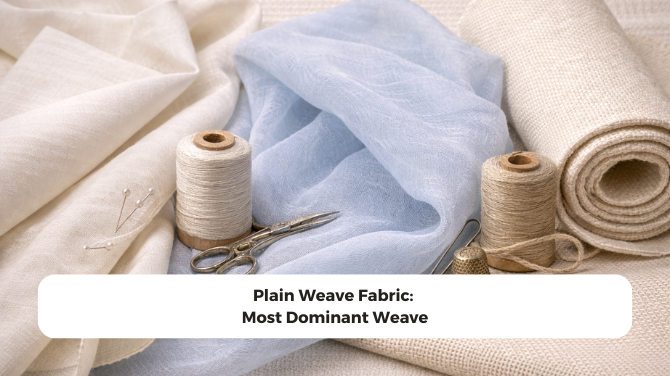
At its core, plain weave is the most basic way to construct a fabric. Every warp yarn crosses each weft yarn alternately, creating a tight and balanced structure. If you’ve explored different constructions in woven fabrics, this is usually the starting point before moving into more complex weaves. Everything else in weaving builds from this idea, either by reducing interlacing or modifying it.
Where It All Started
Plain weave is not new. In fact, it’s probably one of the oldest weaving methods still in use today. Long before modern textile machinery, this was the go-to structure simply because it was easy to execute and reliable. Even now, with advanced looms and automation, the basic principle hasn’t changed. That says something about how effective it is.
Why It Feels Different From Other Weaves
Plain weave fabric tends to feel more stable and slightly firmer compared to other weaves. There’s less movement and flexibility because of the frequent interlacing. Everything is held tightly in place. If you compare it to smoother structures like satin or more complex ones like jacquard fabric, the difference becomes obvious. Those allow more yarn movement, which changes how the fabric drapes and feels. Plain weave can keep everything locked in one place.
The Strength Comes From the Structure
One of the biggest advantages of plain weave is its strength. Because yarns interlace so frequently, the fabric becomes more durable, increasing its wearability, holding its shape, and doesn’t shift easily during stitching. That’s why it’s often used in applications where stability matters more than appearance.
But It Has Its Limits
Most people say that the only limitation of plain weave with its softer weaves is that its kind of a stiff fabric. It doesn’t drape as smoothly, and visually it can look quite basic. If someone is looking for texture or a more premium visual effect, they usually move toward options like dobby fabrics or jacquard. Plain weave is not really designed for that.
How Plain Weave Fabric Is Made
The manufacturing process is straightforward, but that doesn’t mean it’s careless. It starts with yarn selection, which already influences how the fabric will feel. The loom is then set up to alternate warp and weft threads consistently. Because the structure is simple, production is generally faster compared to more complex weaves. But here’s something people often overlook. Even though the weave is basic, yarn quality still defines the final result. A poor yarn will still give a poor fabric.
Yarn Choice Changes Everything
This is where things get more interesting. The same plain weave structure can feel completely different depending on the yarn used. Using finer yarn creates a smoother and lighter fabric, while thicker yarn gives a heavier and more durable feel. You can see this clearly in fabrics like cotton woven fabric, where the yarn selection changes the outcome even within the same weave. So plain weave is not just one fixed type of fabric. It’s more like a base that can be adjusted.
Common Types of Plain Weave Fabrics
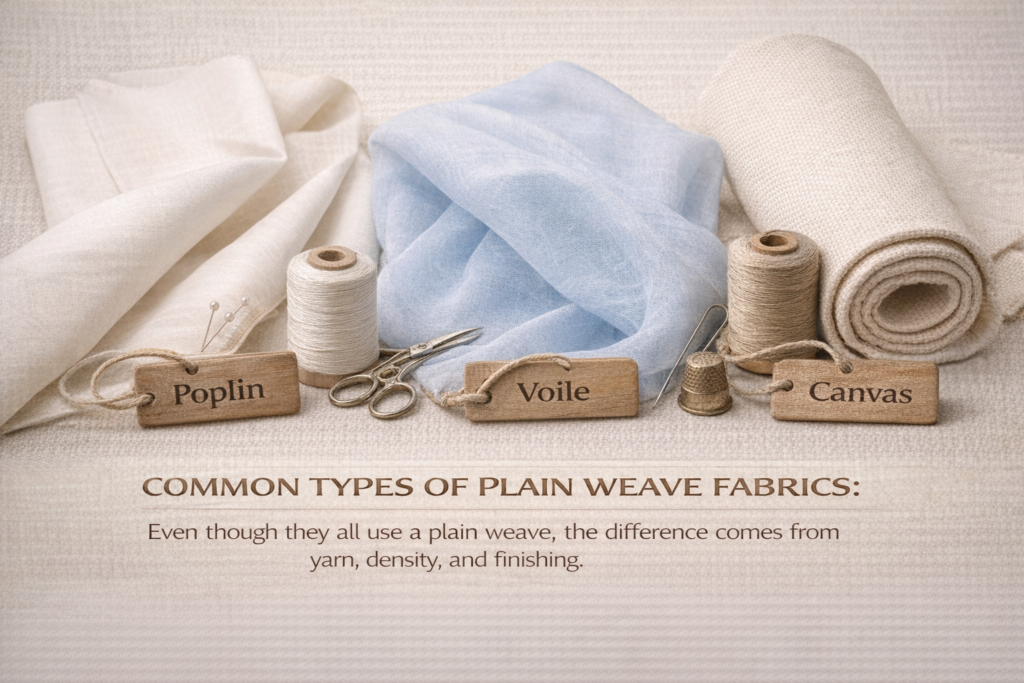
Even though the structure stays the same, there are many variations. Poplin is smooth and tightly woven, voile is lighter and more breathable, and canvas is heavier and more rugged.
All of them use plain weave, but they don’t feel the same at all. The difference comes from yarn, density, and finishing rather than the weave itself.
Dyeing and Finishing Are More Forgiving
Compared to other weaves, plain weave handles dyeing relatively well. Because the surface is even, color tends to distribute more uniformly, which reduces visible inconsistencies.
That said, the fiber still plays a role. As explained in criteria for selecting dyes by fibre content, different fibers absorb dye differently. But overall, plain weave is easier to manage in this area.
Sampling Still Matters
Even with a simple structure, sampling is not something you skip. Differences still show up in fabric weight, hand feel, shrinkage, and finishing. Sometimes, two plain weave fabrics with similar specifications can behave differently in real use. This is something we’ve seen in cases like woven sample, where early testing helps avoid problems later.
Export Orders and Consistency
Plain weave fabric is easier to standardize compared to more complex weaves, and that’s one of its biggest advantages. But consistency still depends on proper process control.
If yarn quality varies, the fabric will vary. If finishing is inconsistent, the final look changes. Buyers often run into this when sourcing, especially in situations like why buyers struggle with Indian woven fabric exporters, where consistency becomes the real challenge.
A Small Observation From Production
Plain weave looks simple, so people assume it’s easy to produce. But in reality, it can be quite unforgiving. There’s nowhere to hide mistakes. In more complex fabrics, patterns or textures can distract from small issues. In plain weave, everything is visible. That makes quality control even more important.
Plain Weave vs Other Weaves
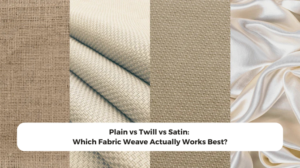
If you compare plain weave with other structures, the differences are quite clear. Twill offers more flexibility and a diagonal pattern, satin gives smoothness and shine, and jacquard adds design complexity. Plain weave focuses on stability. It doesn’t try to do everything, but what it does, it does consistently.
Final Thoughts
Plain weave fabric doesn’t stand out visually, and it doesn’t try to. But it works. It’s stable, reliable, and easy to produce at scale. That’s why it continues to be used across so many applications. Once you start looking at it beyond just “basic fabric” and understand how yarn, density, and finishing affect it, you realize there’s more depth to it than it first appears. If you are looking for a plain weave fabric manufacturer, please contact us.
Frequently Asked Questions
What is plain weave fabric?
It is a basic weave structure where warp and weft yarns alternate over and under each other.
Is plain weave strong?
Yes, it is one of the strongest weave structures due to frequent interlacing.
What are examples of plain weave fabrics?
Poplin, voile, and canvas are common examples.
Is plain weave soft?
It can be, depending on yarn and finishing, but it is generally less soft than satin.
Where is plain weave used?
It is used in apparel, home textiles, and industrial fabrics.