Not all textile dyes work the same way. Some bond with cotton, some need heat, some are better for deep shades, and some are chosen mainly for sustainability reasons. This guide breaks down the main dye types used in textile colouring, in simple terms, from a fabric manufacturer’s point of view.
Check out our digital swatch here
Why understanding textile dyes actually matters
When people talk about fabric colour, most conversations stop at shade cards. But inside a mill, colour choice starts much earlier. The type of dye used affects cost, colourfastness, hand feel, wash performance, and even whether a fabric can meet certain brand standards.
From a woven fabric manufacturer’s side, dye selection is never random. It depends on fibre type, end use, buyer expectations, and sometimes even the country the garment will be sold in. A kidswear brand will not choose dyes the same way a menswear shirting label would. And a sustainable program changes things even more.
So let’s walk through the types of dyes used in textile colouring, without making it sound like a chemistry class.
Reactive dyes
Reactive dyes are probably the most talked about dyes when cotton fabrics are involved. They are widely used for cotton, viscose, modal, and other cellulosic fibres.
What makes reactive dyes special is that they form a chemical bond with the fibre. Because of this, the colour penetration is strong and wash fastness is generally good.
From a manufacturing point of view, reactive dyes are commonly used for solid dyed fabrics, yarn dyed fabrics, and even prints. They do require careful process control, especially water quality and fixation time. If not handled properly, colour bleeding can become an issue.
These dyes are often preferred for shirting, dresses, kidswear, and home textiles where wash performance matters.
Reference: https://textilelearner.net/reactive-dyes-in-textiles/
Direct dyes
Direct dyes are simpler and cheaper compared to reactive dyes. They are applied directly to the fibre without complex bonding chemistry.
They work mainly on cotton and viscose, but the downside is lower wash fastness. Over time, colours may fade faster, especially with repeated washing.
That said, direct dyes are still used in some applications where cost sensitivity is high or where vintage and washed-down looks are acceptable. Certain fashion programs actually prefer this softer fading behavior.
From a mill perspective, these dyes are easier to run but usually avoided for premium export programs.
Vat dyes
Vat dyes are known for their excellent colourfastness. Indigo, which is used for denim, is the most well known vat dye.
These dyes are not water soluble initially. They go through a reduction and oxidation process to fix the colour into the fibre. Sounds complex, and honestly, it is.
Vat dyes are chosen when durability is critical. Workwear, denim, and heavy duty garments rely on them. They handle washing, sunlight, and abrasion better than most dye types.
The downside is higher processing cost and stricter effluent treatment requirements.
Reference: https://www.britannica.com/science/vat-dye
Sulphur dyes
Sulphur dyes are mostly used for dark shades like black, navy, brown, and olive. They are commonly applied on cotton fabrics.
They offer decent wash fastness and are more cost effective than vat dyes for deep colours. However, sulphur dyes can sometimes affect fabric strength if not processed carefully.
In woven fabric manufacturing, sulphur dyes are often selected for bottoms, uniforms, and fabrics where dark solid shades are needed in large volumes.
Environmental handling is important here, since sulphur-based processes require proper wastewater treatment.
Disperse dyes
Disperse dyes are used almost exclusively for synthetic fibres like polyester and acetate.
These dyes work at high temperatures and rely on the fibre structure opening up to absorb colour. Because of this, dyeing polyester is a very controlled process.
For blended fabrics like cotton polyester, disperse dyes are often combined with reactive or direct dyes in a two step process.
Disperse dyes are essential for sportswear, performance fabrics, and many modern blended woven fabrics.
Reference: https://textilefocus.com/disperse-dyes/
Acid dyes
Acid dyes are mainly used for protein fibres like wool, silk, and nylon.
They produce bright shades and good colour clarity. However, they are not suitable for cotton.
In woven fabric programs, acid dyes come into play when working with wool blends, silk fabrics, or specialty fashion fabrics. The process requires careful pH control, otherwise shade variation can happen easily.
Natural and vegetable dyes
Natural dyes are making a quiet comeback, especially in sustainability focused collections.
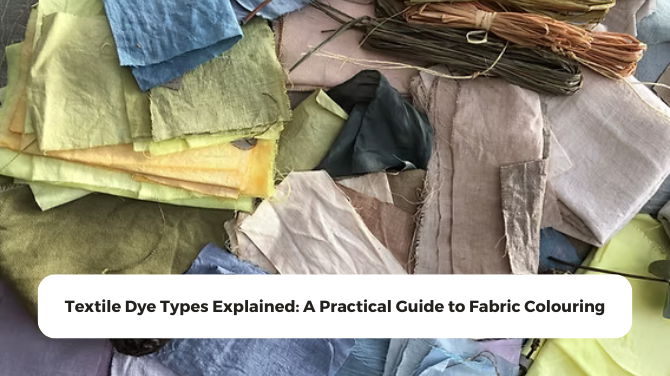
These dyes are derived from plants, roots, bark, flowers, and minerals. Indigo, madder, turmeric, and pomegranate are common examples.
Natural dyes offer a unique look. Slight shade variation is normal, and many buyers actually value that. But colour consistency across bulk production is harder to achieve.
From a manufacturer’s side, natural dyeing is usually done in small batches and requires experienced dyeing partners.
Reference: https://www.craftmark.org/natural-dyes
Pigment dyes
Pigment dyeing is slightly different. The colour sits on the surface of the fabric rather than bonding with the fibre.
Pigments are fixed using binders and curing processes. They are widely used in printing, especially AOPs and surface designs.
Pigment dyeing allows almost any colour on almost any fibre. But hand feel and crocking need to be managed properly.
How dye selection affects fabric performance
Choosing the right dye is not just about shade. It affects shrinkage, hand feel, colourfastness, and even how a garment ages over time.
A reactive dyed cotton shirt will behave very differently from a pigment dyed one after ten washes. Merchandisers and product developers often see this only after sampling, but mills factor this in much earlier.
Understanding dye types helps reduce sampling loops, shade rejections, and post production complaints.
Final thoughts from a fabric manufacturing point of view
Textile colouring is not a one size fits all process. Each dye type has its place, and the best choice depends on fibre, end use, compliance needs, and brand positioning.
For anyone sourcing woven fabrics, having a basic understanding of the types of dyes used in textile colouring makes conversations with mills more productive. It also leads to better decisions, fewer surprises, and smoother production runs. If you are looking for a reliable woven fabric manufacturer, please contact us.