TL;DR
Polyester fabric material is widely used because it’s durable and cost-effective, but not all polyester fabrics perform the same. Fabric construction, dyeing, sampling, and supplier control matter more than most buyers expect. Small differences in these areas can affect the final garment.
Polyester is everywhere. You see it in shirts, uniforms, blends, even fabrics that don’t feel synthetic at first touch. So naturally, many buyers assume it’s straightforward.
Pick the fabric. Approve the sample. Place the order. But that’s usually just the beginning.
I remember a case where a buyer approved a polyester sample without much hesitation. Everything looked right. Color matched, finish looked clean. But when bulk came in, the fabric felt slightly stiffer. Not wrong, just different enough to affect how the garment sat.
That kind of thing doesn’t show up in a spec sheet.
Check out our digital swatch here
And honestly, that’s where working with polyester fabric material becomes a bit more nuanced than expected.
What Polyester Fabric Material Actually Means
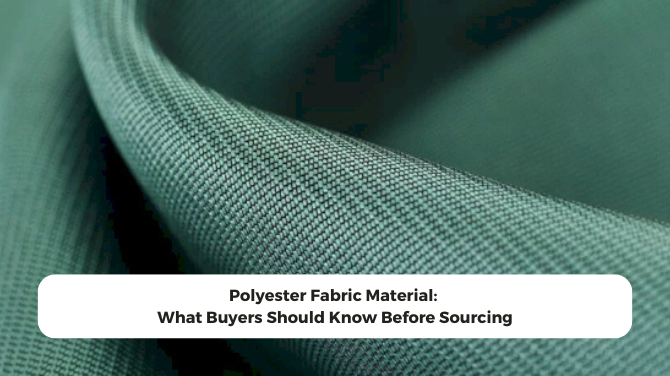
At a basic level, polyester is a synthetic fiber. It’s engineered, not grown like cotton.
But from a buyer’s point of view, what matters is how it behaves as a fabric.
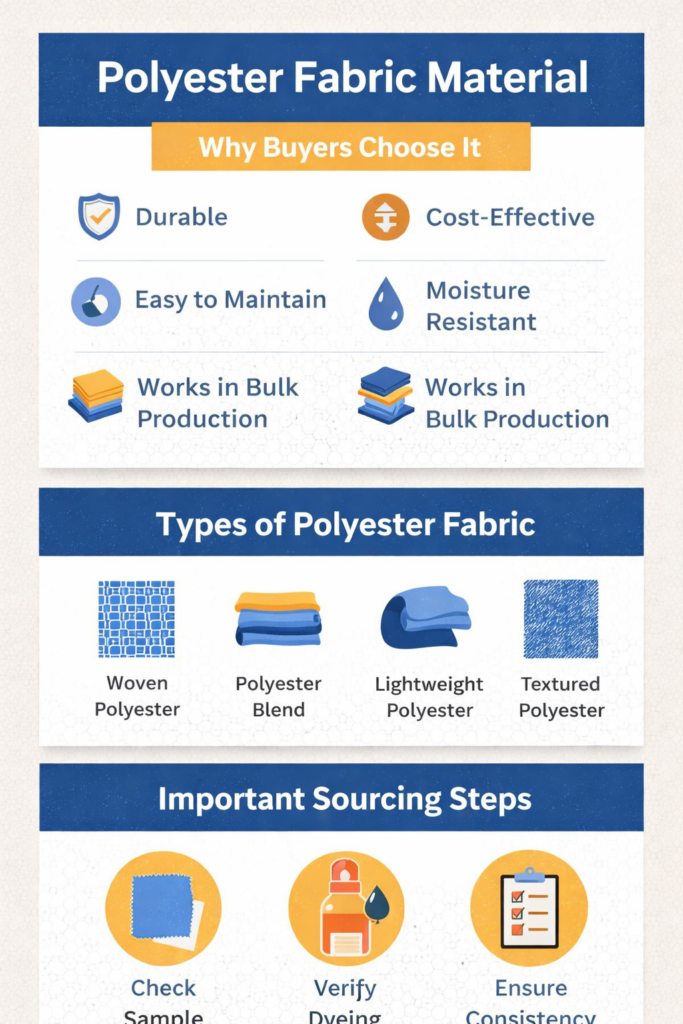
Most polyester fabrics are known for:
- durability
- wrinkle resistance
- low shrinkage
- easy maintenance
Sounds simple enough. But the part that often gets missed is this. The same polyester fiber can behave very differently depending on how the fabric is constructed and finished.
So just saying “polyester” doesn’t really tell you much about the final product.
Polyester fabrics come in Different Types
So, when it comes to polyester, there are a lot of different types of fabric within the category. This distinction is mainly based on construction and usage
Some common ones:
- woven polyester fabrics for structured garments
- blended fabrics for comfort and flexibility
- lightweight polyester for summer wear
- textured polyester for design variation
If you’ve worked with structured weaves before, especially patterns like the ones explained in our guide on dobby fabrics, you’ll know how much the weave itself can change the feel of the fabric. Two fabrics can have the same composition, but once you touch them, they feel completely different.
Why Buyers Still Choose Polyester
There’s a reason polyester keeps showing up in export orders. From a practical standpoint, it solves a few common challenges:
- it’s more affordable than many natural fibers
- it performs consistently in bulk
- it holds its shape well
- it’s easier to maintain after washing
For large-scale production, consistency matters more than anything. But this is also where assumptions can go wrong. Because while the fiber is consistent, the fabric outcome depends on how it’s processed.
Fabric Construction Changes Everything
A lot of sourcing decisions are made based on composition alone. 100% polyester. Polyester blend. That sort of thing. But that’s only part of the picture. I’ve seen situations where two polyester fabrics with the same composition ended up performing very differently. The difference came down to construction.
Things like:
- GSM being slightly off
- weave not tight enough
- finishing not uniform
These are small details, but they affect the final garment more than expected.
In fact, this is quite similar to how certain textured cotton fabrics behave. If you’ve seen how variations work in fabrics like cotton slub fabric, you’ll understand how even minor irregularities can change the overall look and feel.
Polyester Blends: Where Most Decisions Happen
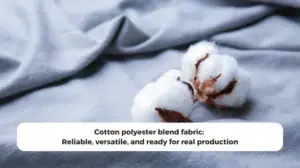
Pure polyester has its place, but most buyers end up working with blends. Because blends offer a balance.
Some common ones:
- polyester + cotton for breathability
- polyester + viscose for softness
- polyester + spandex for stretch
In real sourcing scenarios, very few brands go all in on 100% polyester unless required.
Blends give more flexibility. But here’s the part that’s easy to overlook. Even a small change in blend ratio can affect:
- softness
- airflow
- durability
And sometimes, that difference only becomes obvious after the garment is made.
Sampling Shows You What Specs Don’t
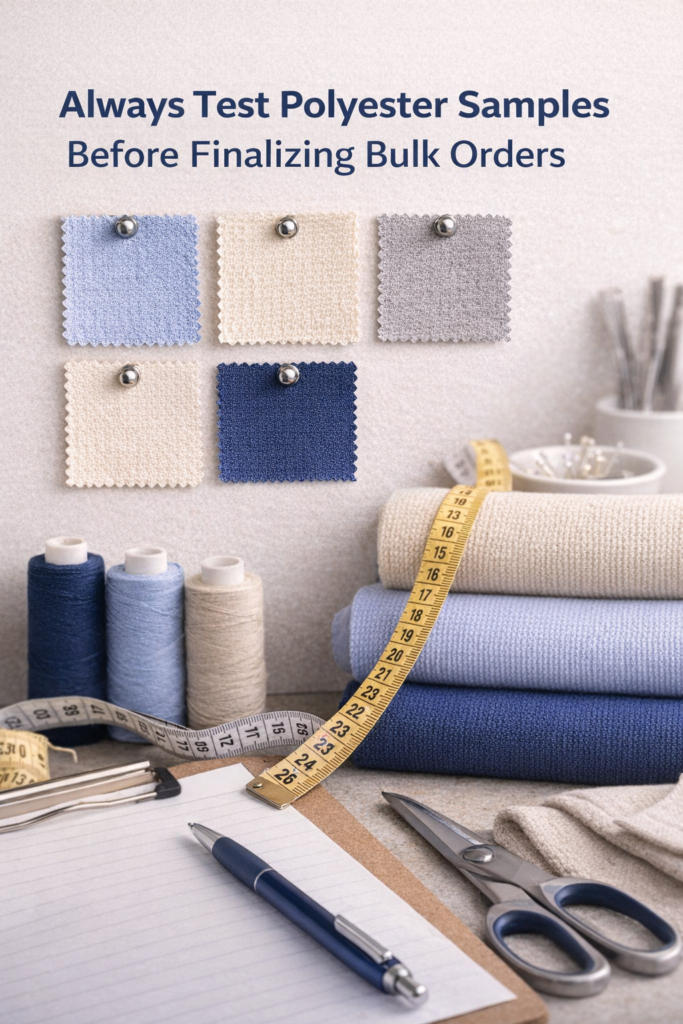
Sampling is one of those steps that feels routine, but it’s where things become real. On paper, everything can look correct. But once you get the sample in hand, you start noticing details. Buyers usually check:
- fabric weight
- hand feel
- shrinkage
- color
And sometimes, this is where small mismatches appear. I’ve noticed that delays often start here too. Not because something went wrong, but because revisions take time. Even one extra round of sampling can push timelines.
We spoke about this in our article on reducing garment sample development time, and it’s more common than people expect.
Dyeing Polyester Needs More Control Than Expected
Polyester doesn’t behave like cotton during dyeing.It needs specific dyes and controlled conditions. When things are not handled properly, you might see:
- uneven shades
- fading issues
- slight variation between batches
This becomes more sensitive when blends are involved. Each fiber reacts differently, so the process needs to be adjusted accordingly. The same idea is explained in our guide on criteria for selecting dyes by fibre content, where fiber type directly affects dye choice.
Export Fabric Comes With Higher Expectations
When polyester fabric is used for export, expectations are naturally higher. Buyers are not just checking the fabric itself. They’re thinking about consistency across bulk, timelines, and how the final garment performs. A lot of issues don’t come from the fabric alone. They come from coordination.
Things like:
- communication gaps
- unclear specifications
- delays in approvals
We’ve seen similar patterns discussed in why buyers struggle with Indian woven fabric exporters, where small issues tend to build up over time.
Production Planning Still Plays a Role
Even with polyester, production is not just one step.
It involves:
- yarn sourcing
- weaving
- dyeing
- finishing
If these don’t align properly, delays happen. In one case, everything was ready except dyeing capacity. That small delay pushed the delivery timeline by days. It’s not always a big problem, but it affects planning.
Why the Supplier Matters More Than the Fabric
At some point, most buyers realize this. Choosing the right fabric is important, but choosing the right supplier matters more. Because the supplier controls how everything is executed.
A reliable exporter helps with:
- consistency between sample and bulk
- accurate dyeing
- timeline management
- clear communication
For example, when working with fabrics that need consistency across batches, like lighter constructions such as seersucker fabric, process control becomes critical.
At Dinesh Exports, the focus is on maintaining that consistency across the entire process.
Final Thoughts
Polyester fabric material is widely used, and for good reason. It’s reliable, scalable, and works well in different applications. But the outcome depends on more than just the fiber.
Construction, dyeing, sampling, and supplier processes all play a role. Once you start paying attention to these details, sourcing becomes more predictable. And honestly, a lot less frustrating. If you are looking for a reliable woven fabric manufacturer, please contact us.
Frequently Asked Questions
What is polyester fabric material used for?
It is used in apparel, uniforms, home textiles, and blends for durability and cost efficiency.
Is polyester fabric good for clothing?
Yes, especially for durability and easy care, though blends are often preferred for comfort.
What is polyester cotton fabric?
It is a blend that combines polyester strength with cotton breathability.
Does polyester shrink?
Polyester has low shrinkage compared to natural fibers.
Why is polyester popular in export fabric?
Because it offers consistency, durability, and cost efficiency in bulk production.