TL;DR
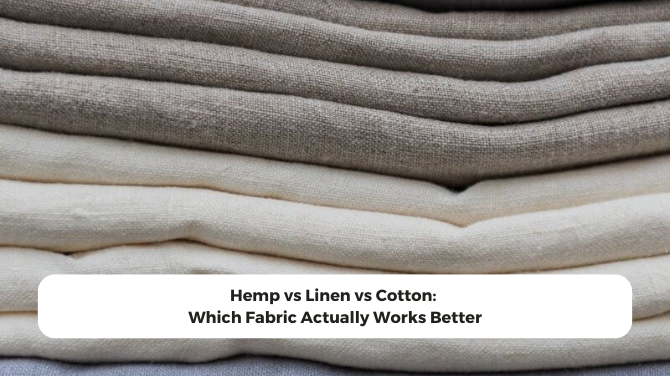
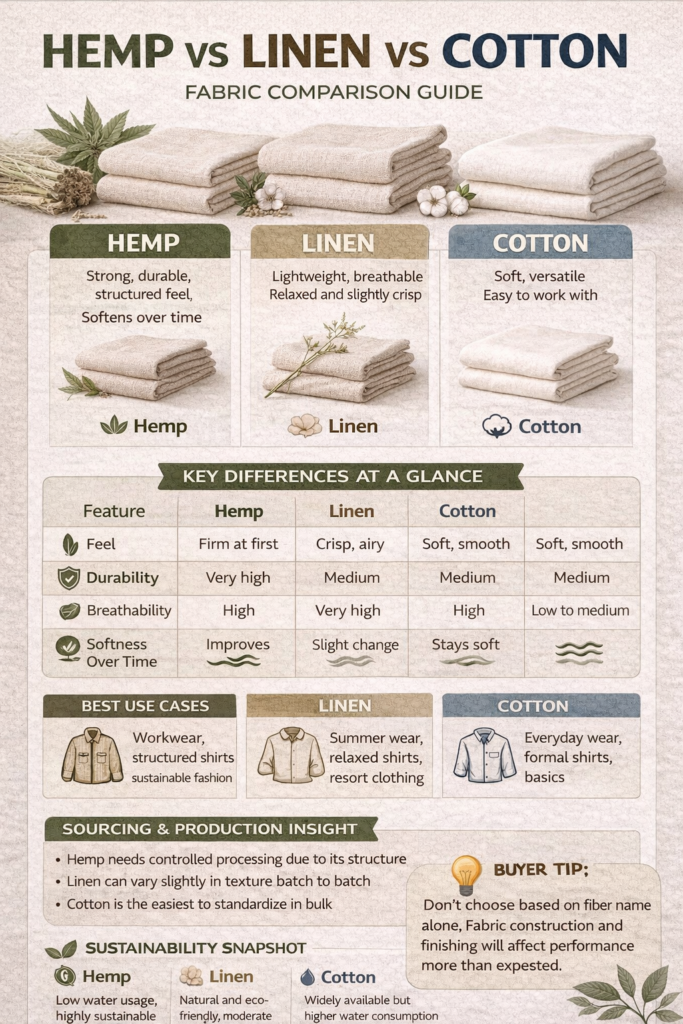
Hemp, linen, and cotton are all natural fabrics, but they behave very differently. Cotton is softer and more versatile, linen is breathable and relaxed, while hemp is stronger and more durable. The right choice depends on the garment, not just the fiber.
Hemp, Linen, Cotton, They All Sound Similar… Until You Work With Them
On paper, hemp, linen, and cotton sit in the same category. Natural fibers. Breathable. Used in apparel. So it’s easy to assume they behave the same. They don’t. I’ve seen buyers switch from cotton to linen expecting similar results, only to realize the fabric reacts differently during stitching. Same thing happens with hemp. Looks simple at first, then small differences start showing up. That’s usually where the confusion begins.
Check out our digital swatch card here
Cotton Feels Familiar for a Reason
Most buyers start with cotton. It’s predictable. Easy to handle. Works across a wide range of products. Cotton fabrics can be soft, structured, lightweight, or heavy depending on how they’re made. That flexibility is hard to replace. But even within cotton, performance changes based on construction.
For example, something like cotton slub fabric feels completely different from a clean poplin, even though both use the same base fiber. That’s why cotton works well for: Shirts, everyday wear, basics, and large-scale production where consistency matters. Still, cotton has its limits. It wears out faster than hemp and doesn’t always give the same airy feel as linen in hot conditions.
Linen Is All About Air and Movement
Linen behaves differently the moment you touch it. It feels lighter. Slightly crisp, but breathable in a way that’s hard to replicate. It doesn’t try to be smooth or structured. Instead, it leans into that relaxed, slightly wrinkled look. That’s exactly why brands use it for summer collections. But here’s something buyers often realize later. Linen wrinkles easily. And not everyone likes that.
From a production side, it also needs a bit more attention during handling because the fabric can shift more compared to cotton. If someone is expecting a clean, polished look, linen might not always deliver that without additional finishing.
Hemp Feels Stronger Than Both
Hemp stands out immediately. It feels more structured, slightly firm, and noticeably stronger.
At first, some buyers think it’s too rigid. But over time, it softens. Not in the same way cotton does, but enough to become more comfortable with use. This is where hemp differs. It’s not trying to be soft from the start. It’s built for durability.
Compared to softer fabrics like lyocell fabric, hemp sits on the opposite side of the spectrum. Less flow, more structure. And that’s not a disadvantage. It just depends on what you need.
Construction Changes the Story Completely
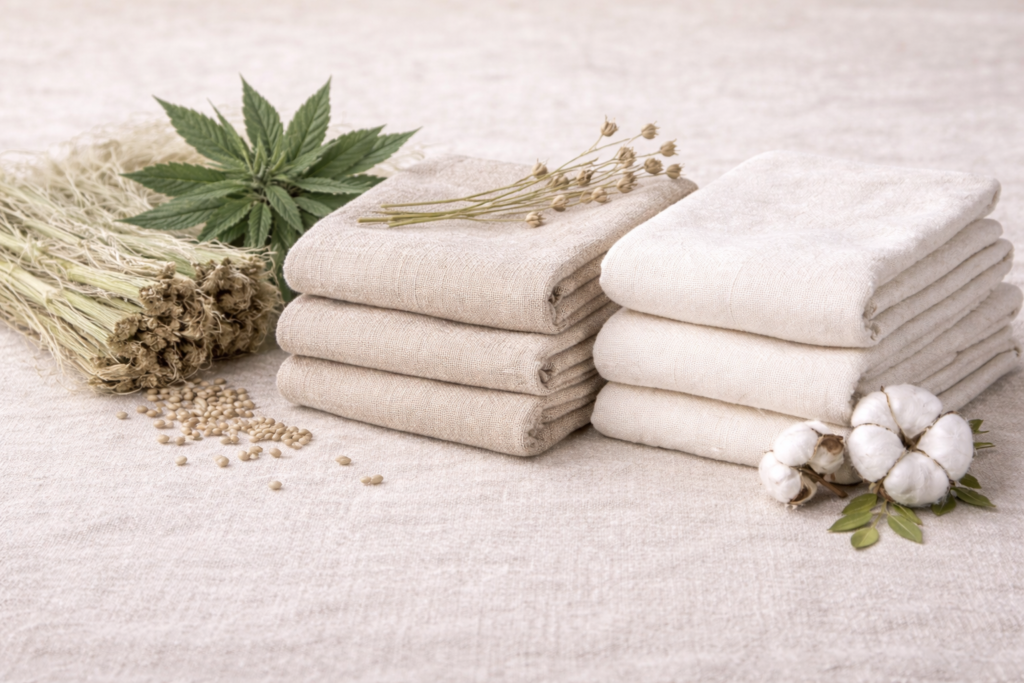
Here’s where things get more interesting. Even though we’re comparing fibers, the actual fabric performance depends heavily on construction. A tightly woven cotton fabric can feel more structured than a loosely woven linen. A blended hemp fabric can feel softer than expected. This is something that often gets overlooked.
If you’ve worked with different weave types before, like those explained in woven fabrics, you’ll know how much variation comes from structure alone. So comparing fibers without considering construction only tells half the story.
Dyeing Behavior Is Not the Same
Each of these fabrics reacts differently to dyeing. Cotton is the easiest to work with. It takes dye well and gives consistent results in most cases. Linen absorbs dye too, but sometimes you’ll notice slight variations in shade because of its fiber structure. Hemp can be a bit more unpredictable if the process is not controlled properly. Shade variation or uneven tones can show up if handling is not consistent.
These are not major issues, but they matter in bulk production. We’ve seen similar patterns when working with different fibers, especially in situations explained in criteria for selecting dyes by fibre content, where fiber behavior directly affects final results.
Comfort Depends on What You Mean by Comfort
This part is subjective. Cotton feels soft and familiar. That’s why most people are comfortable with it immediately. Linen feels airy and breathable, especially in hot weather. But it doesn’t feel “soft” in the usual sense. Hemp feels structured at first, but improves over time. So when someone says “comfortable,” it depends on what they’re used to. There isn’t a single answer here.
Sampling Becomes More Important Than Expected
This is something that applies to all three fabrics. On paper, everything might look fine. Specs match, composition is clear. But real behavior shows up during sampling.
You start noticing: How the fabric drapes, how it reacts after washing, how consistent the color looks, how it handles stitching.
Sometimes, fabrics that seem similar initially behave very differently once processed.
We’ve seen this in early-stage checks like those discussed in woven sample, where small differences show up later if not caught early.
Export Orders Add Another Layer
Export orders introduce an additional consideration. Consistency is paramount when these fabrics are destined for international markets. Cotton’s ubiquity and established production methods make it a relatively easy material to manage. Linen and hemp, on the other hand, are more natural and less refined, which can result in slight variations between batches.
It just means the process needs to be controlled more carefully. This is something buyers often experience in sourcing scenarios like why buyers struggle with Indian woven fabric exporters, where coordination and consistency matter more than expected.
So Which One Should You Choose?
There’s no single winner here. It depends on what you’re trying to achieve. For both adaptability and reliability, cotton is a solid choice. If breathability and a relaxed look are the focus, linen makes sense. If durability and sustainability are priorities, hemp becomes a strong option. Most of the time, the decision is not about “which is better,” but “which fits the product.”
Final Thoughts
At a glance, hemp, linen, and cotton seem similar. Natural fibers, used in apparel, widely available. But once you start working with them, the differences become clear. Cotton feels familiar. Linen feels breathable. Hemp feels strong. None of them are better in every situation. But each one works really well when used for the right purpose. That’s what actually matters. If you are looking for cotton, hemp, or linen woven fabric manufacturer, please contact us.
Frequently Asked Questions
Is hemp better than cotton?
It depends on use. Hemp is stronger and more durable, while cotton is softer and more versatile.
Is linen cooler than cotton?co
Yes, linen is generally more breathable and performs better in hot weather.
Which fabric lasts the longest?
Hemp typically lasts longer due to its strong fiber structure.
Do all three fabrics wrinkle?
Yes, but linen wrinkles the most, followed by hemp. Cotton wrinkles less depending on finishing.
Which fabric is most sustainable?
Hemp is often considered the most sustainable, followed by linen, then cotton.