TL;DR
Cotton lycra fabric combines comfort and stretch, making it ideal for modern apparel. But not all fabrics perform the same. Stretch recovery, GSM, and finishing quality matter more than most buyers expect. Sampling and supplier consistency are key to avoiding issues in bulk.
At first glance, cotton lycra fabric feels like an easy choice. Soft like cotton. Stretchy because of lycra. Works for a lot of garments. Done. That’s usually how most buyers look at it in the beginning. But once you start sourcing it regularly, you notice small differences. And those differences can change how the final product turns out.
I remember one buyer mentioning how their fabric felt perfect in the sample stage. Good stretch, nice recovery. But in bulk, the fabric didn’t bounce back the same way. Not completely bad, just… slightly off. And that small difference affected the fit of the garment.
That’s the thing with cotton lycra fabric. It’s not complicated, but it’s not as straightforward as it looks either.
Check out our digital swatch here
What Is Cotton Lycra Fabric, Really?
In simple terms, it’s a blend.
- cotton gives softness and breathability
- lycra (or elastane) adds stretch
Sounds basic. But how these two are combined makes all the difference.
Most cotton lycra fabrics contain:
- 95% cotton + 5% lycra
- or similar variations
Even a 1–2% change in lycra can affect stretch and recovery. And this is where buyers sometimes underestimate things. Because on paper, those numbers don’t seem like a big deal. But in actual garments, they are.
Why It’s So Popular in Apparel
There’s a reason this fabric shows up everywhere. From a practical standpoint, it solves a real problem. Pure cotton is comfortable, but it doesn’t stretch. Polyester stretches, but doesn’t always feel natural.
Cotton lycra sits right in between.
It gives:
- comfort for daily wear
- flexibility for movement
- better garment fit
You’ll see it used in:
- t-shirts
- leggings
- casual shirts
- kidswear
In fact, when brands work on comfort-focused collections, they often lean toward blends like this instead of pure fabrics. Similar to how textured fabrics like cotton slub fabric are chosen for feel, cotton lycra is chosen for function.
Stretch Is Not the Only Thing That Matters
Most buyers focus on stretch. That’s expected. But stretch alone doesn’t decide fabric performance. What really matters is stretch recovery.
In simple terms:
- how well the fabric returns to its original shape
Because if recovery is poor, the garment starts losing shape over time.
You might notice:
- bagging at knees or elbows
- loose fitting after a few wears
This usually comes down to:
- lycra quality
- fabric construction
- finishing process
And this is not always visible during first inspection.
Fabric Construction Still Plays a Big Role
Even with blends, construction matters more than people think. Two cotton lycra fabrics with the same composition can behave differently depending on:
- knit or weave structure
- GSM
- finishing
For example, a slightly lower GSM fabric might feel great initially, but may not hold structure over time. If you’ve worked with structured woven fabrics before, like the variations explained in dobby fabrics, you’ll know how construction changes everything, even when the fiber content is similar. Same idea applies here.
Common Mistakes Buyers Make
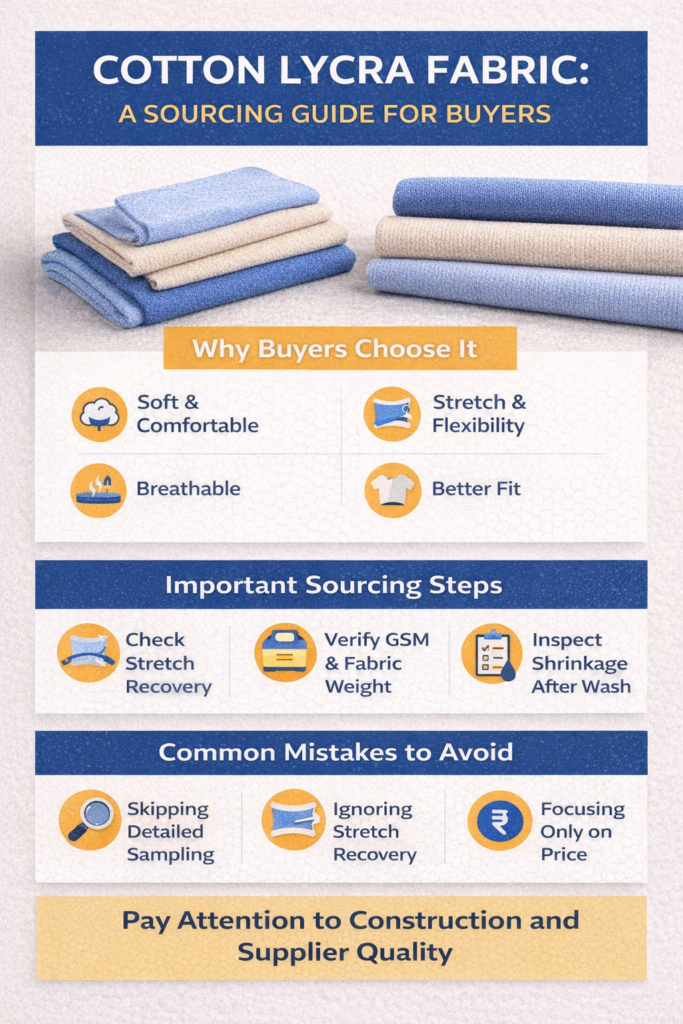
This is where things get practical. Some mistakes show up quite often:
- focusing only on price
- ignoring stretch recovery
- skipping detailed sampling
- not checking shrinkage properly
None of these seem like major issues at first. But once production starts, they become harder to fix. I’ve noticed that buyers usually learn this after one or two orders. After that, they start paying more attention to details.
Sampling Is Where the Real Picture Shows
Sampling is not just a formality here. It’s where you catch most of the issues early.
Buyers should check:
- stretch and recovery
- fabric weight
- shrinkage after wash
- hand feel
And honestly, this step should not be rushed. Even a small revision at sampling stage can save a lot of trouble later. We’ve seen this happen quite often, especially in situations similar to what we discussed in reducing garment sample development time, where delays start from repeated corrections.
Dyeing and Finishing Can Affect Stretch Too
This is something that doesn’t get talked about much. Dyeing and finishing don’t just affect color. They can impact fabric behavior. If not handled properly, you might see:
- reduced stretch
- uneven recovery
- slight stiffness
This happens because elastane reacts differently compared to cotton during processing.
The same principle applies when working with mixed fibers, as explained in criteria for selecting dyes by fibre content, where each fiber needs a controlled approach.
Export Orders Need More Consistency
When cotton lycra fabric is used for export, expectations go up. Buyers are not just looking at one batch. They expect:
- consistent stretch
- uniform color
- same hand feel across production
And this is where small inconsistencies become noticeable. A slight variation in one batch might not seem like a big deal, but across bulk orders, it adds up. We’ve seen similar concerns come up in sourcing scenarios like those discussed in why buyers struggle with Indian woven fabric exporters, where process gaps create issues over time.
Production Planning Still Matters
Even though this is a blend fabric, production still involves multiple steps:
- yarn preparation
- knitting or weaving
- dyeing
- finishing
If one step is delayed, everything shifts.I’ve seen cases where finishing took longer than expected, and that pushed the delivery timeline. Not a huge delay, but enough to affect planning.
Why the Supplier Makes a Bigger Difference Than You Think
At some point, most buyers realize this. The fabric is important, but the supplier controls how that fabric turns out.
A good supplier ensures:
- consistent stretch and recovery
- proper finishing
- stable production timelines
- clear communication
For example, when working with fabrics that need precision, like stretch blends or even lighter structured fabrics such as seersucker fabric, process control becomes critical.
At Dinesh Exports, the idea is simple. What gets approved in sampling should match what gets delivered in bulk.
Final Thoughts
Cotton lycra fabric works because it balances comfort and flexibility. That’s why it’s used so widely. But the outcome depends on more than just the blend. Stretch recovery, construction, dyeing, and supplier processes all play a role. Once you start paying attention to these details, sourcing becomes much more predictable. And honestly, fewer surprises show up later.
Frequently Asked Questions
What is cotton lycra fabric used for?
It is used in t-shirts, leggings, casual wear, and garments that require stretch and comfort.
Is cotton lycra fabric good for daily wear?
Yes, it combines softness with flexibility, making it ideal for everyday clothing.
What is the difference between cotton lycra and cotton spandex?
They are essentially similar, as lycra is a brand name for elastane or spandex.
Does cotton lycra shrink?
It can shrink slightly due to cotton content, so pre-shrinking and testing are important.
Why is stretch recovery important?
Because it ensures the garment retains its shape after repeated use.