


TLDR
Textile certifications are no longer optional. Buyers expect them. Auditors ask for them. Some are about sustainability, some about safety, some about people. Not every factory needs all of them, but every serious textile business needs a few.
Check out our Digital Swatch here

Why certifications matter in textiles today
Earlier, good quality fabric was enough. That time is gone.
Now buyers want to know:
- Where the fibre came from
- Who made the fabric
- How workers were treated
- What chemicals were used
- Whether claims can be proven
Certifications help answer these questions without long explanations. They build trust fast.
Certifications related to fibre and raw material
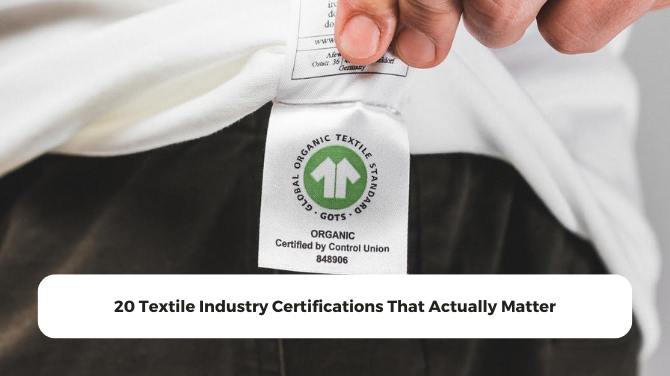
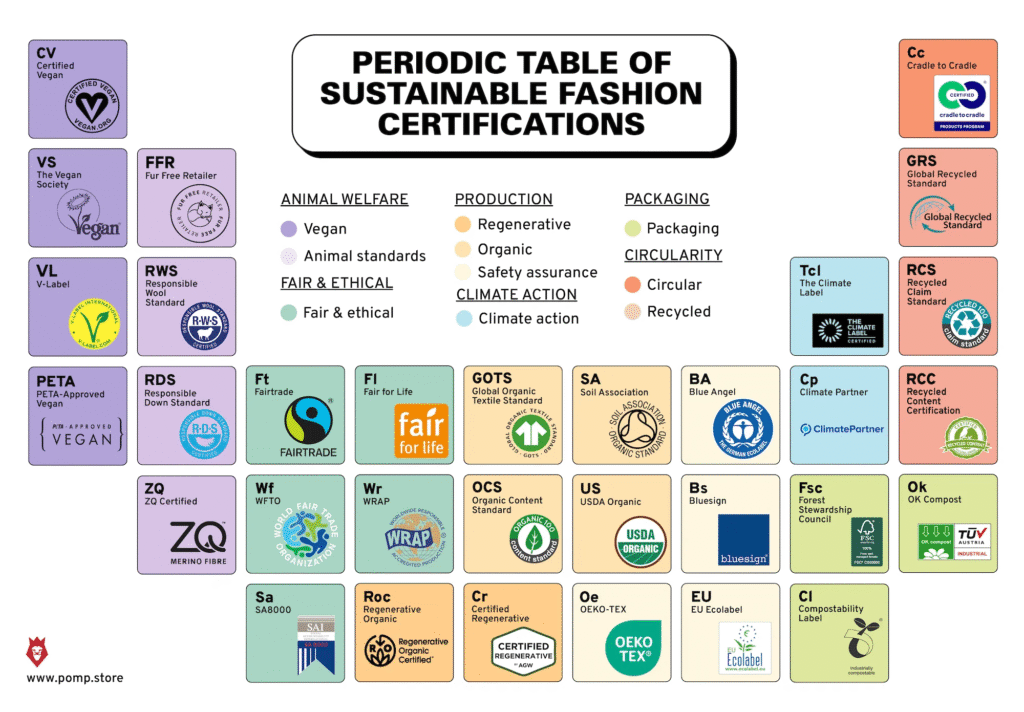
1. GOTS (Global Organic Textile Standard)
For organic textiles from fibre to fabric. Very strict. Widely accepted.
Reference: https://global-standard.org
2. OCS (Organic Content Standard)
Tracks organic content but does not cover processing. Easier than GOTS.
Reference: https://textileexchange.org
3. GRS (Global Recycled Standard)
Used for recycled polyester, recycled cotton, etc. Covers traceability and processing.
Reference: https://textileexchange.org
4. RCS (Recycled Claim Standard)
Simpler version of GRS. Focuses mainly on recycled content.
Reference: https://textileexchange.org
5. BCI (Better Cotton Initiative)
Now called Better Cotton. Focus on sustainable cotton farming, not organic.
Reference: https://bettercotton.org
Certifications for chemical safety and fabric safety
6. OEKO-TEX Standard 100
Checks harmful substances in fabric. Very common buyer requirement.
Reference: https://www.oeko-tex.com
7. ZDHC
Focuses on chemical management and wastewater discharge. Important for wet processing units.
Reference: https://www.roadmaptozero.com
8. Bluesign
Controls chemical inputs at source. Tough to get, but strong reputation.
Reference: https://www.bluesign.com
9. REACH Compliance
Mandatory for Europe. Controls restricted chemicals.
Reference: https://echa.europa.eu

Certifications related to social compliance
10. SA8000
One of the oldest social compliance standards. Focus on worker rights.
Reference: https://sa-intl.org
11. SEDEX SMETA
Audit format used by many buyers. Not a certification exactly, but widely asked.
Reference: https://www.sedex.com
12. BSCI (now amfori BSCI)
European buyers prefer this. Covers labour, safety, ethics.
Reference: https://www.amfori.org
13. WRAP
Common in garment factories. Focus on lawful and ethical manufacturing.
Reference: https://wrapcompliance.org
Certifications for quality and management systems
14. ISO 9001
Quality management system. Shows process discipline.
Reference: https://www.iso.org
15. ISO 14001
Environmental management system. Useful for mills with dyeing and finishing.
Reference: https://www.iso.org
16. ISO 45001
Occupational health and safety. Important for factory safety culture.
Reference: https://www.iso.org
Certifications for performance and testing
17. ISO 17025
For textile testing laboratories. Shows test result reliability.
Reference: https://www.iso.org
18. ASTM Standards
Used mainly for US buyers. Covers testing methods and performance.
Reference: https://www.astm.org
Certifications linked to sustainability and claims
19. Higg Index
Used to measure environmental and social impact. Mostly buyer-driven.
Reference: https://howtohigg.org
20. Fair Trade Textile Standard
Focuses on fair wages and working conditions across supply chain.
Reference: https://www.fairtrade.net

Do all textile businesses need all certifications?
No. And honestly, trying to get everything at once is a mistake.
A woven fabric manufacturer usually starts with:
- OEKO-TEX
- GOTS or GRS
- ISO 9001
- One social audit like BSCI or SMETA
Then adds more based on buyer demand.
Certifications should support business growth, not slow it down.
What buyers really look for behind certificates
Most buyers know certificates can be arranged. What they watch closely is:
- Consistency
- Correct documentation
- Factory awareness
- Actual implementation on floor
A certificate without real practice does not last long.
Final thoughts from a manufacturer’s side
Certifications are not just logos on a website. They shape how a mill runs every day. From yarn sourcing to dye kitchen discipline to worker safety.
For textile businesses planning long-term relationships with brands, certifications are less about passing audits and more about building credibility.
If you are looking for a reliable woven fabric manufacturer that follows sustainability standards, please contact us.